Charging reference
Run time and charging
Nobody warns you about the ratio. A typical ride-on charges for eight to twelve hours to deliver forty-five to ninety minutes of play. Here is why, and what changes it.
Written by
Mike M. · owner, Iron Mako Media
Published October 22, 2026 · last updated November 5, 2026 · specs checked against each maker’s current listing
Price checked November 8, 2026
Verdict first
Quick picks
Nobody warns you about the ratio. A typical ride-on charges for eight to twelve hours to deliver forty-five to ninety minutes of play. Here is why, and what changes it.. Tap any row to jump to that model’s full write-up below, or go straight to Amazon from the price column. Prices last checked November 8, 2026.
| # | Product | Best for | Score | Price |
|---|---|---|---|---|
| 1 | 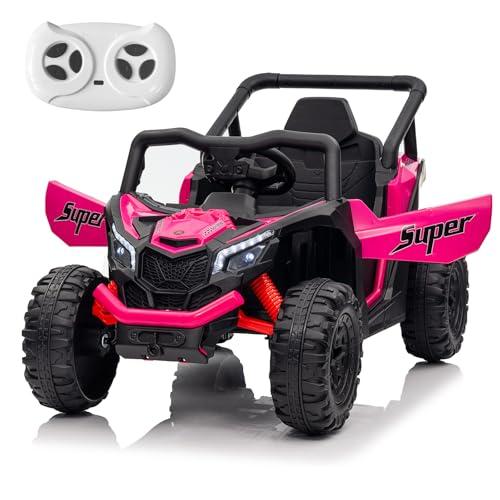 RunFast 24V 4WD Off-Road UTV Best run-time disclosure | 3-6 years, speed-aware run time | 8.5out of 10 | $179.99Amazon #ad disclosure |
| 2 |  NEWDOOD 24V Ride-On Excavator (4-in-1) Best charge-time ratio | Age 3+, four machine modes | 8.8out of 10 | $259.99Amazon #ad disclosure |
| 3 | 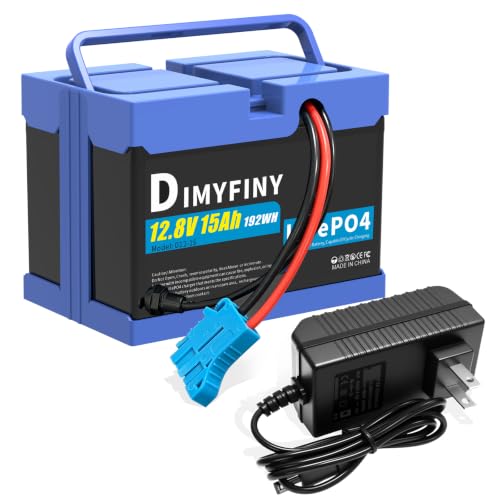 Upgraded 12V 15Ah Battery for Peg Perego John Deere Biggest run-time upgrade | Longest 12V run time | 8.4out of 10 | $65.98Amazon #ad disclosure |
| 4 | 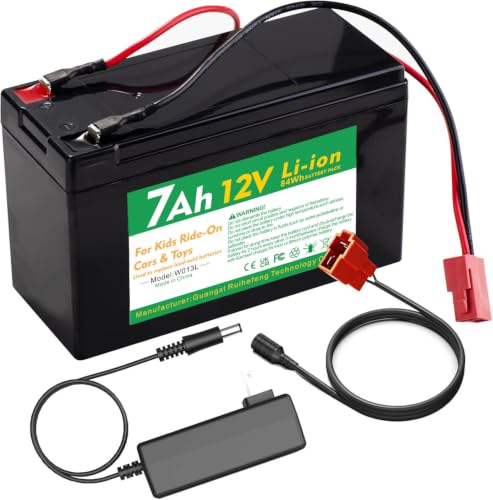 UNIKARO 12V 7Ah Li-ion Battery Pack with Charger Best lithium swap | Lithium swap at 12V | 8.2out of 10 | $49.99Amazon #ad disclosure |
Scores are our own editorial ratings against the published rubric on how we pick. They are not customer ratings and they are not Amazon’s.
This is the specification pair that most often disappoints after purchase, and it is almost entirely a disclosure problem. Of the 126 current listings we checked, fewer than a quarter publish a charge time and only about a third publish a run time. So the ratio — the thing that actually shapes a Saturday afternoon — is usually invisible at the point of sale.
The numbers
What the published figures actually say
| Class | Published run time | Published charge time | Typical ratio |
|---|---|---|---|
| 6V | 30 min – 2 hr | 6 – 12 hr | ~10:1 |
| 12V | 40 min – 2 hr | 8 – 12 hr | ~10:1 |
| 24V | 30 min – 2 hr | 6 – 12 hr | ~8:1 |
| 36V (lithium) | ~90 min | 4 – 6 hr | ~4:1 |
Ranges are the span of published figures across the models in our registry. Products that publish neither figure are excluded rather than estimated.
Notice that the 36V row is the only one with a materially better ratio, and that is not about voltage — it is because those vehicles use lithium batteries. Lead-acid chemistry is what produces the ten-to-one penalty, and almost every 6V, 12V and 24V ride-on is lead-acid.
Why
Why lead-acid charges so slowly
A sealed lead-acid battery has to be charged at a low, controlled current to avoid gassing and plate damage. The chargers supplied with ride-ons are typically 1A or less — one in our registry publishes its output as 1000mA, and it is the only one that publishes any figure at all. A 1A charger filling a 12Ah battery needs twelve hours by simple arithmetic, before accounting for the slow top-off phase at the end.
You cannot shortcut this by fitting a bigger charger. Pushing more current into a sealed lead-acid pack than it is rated for shortens its life sharply and can cause it to vent. The supplied charger is slow because the battery requires it to be.
The first charge
The first charge is different
Two listings in our registry publish a separate first-charge figure, and it is worth knowing about: 10 to 12 hours for the first charge against 8 to 12 subsequently, and in one case 4 to 5 hours for the very first charge against 8 to 12 afterwards. A new sealed lead-acid pack has been sitting partially discharged in a warehouse, and the first full charge is what sets its usable capacity for the rest of its life.
Which means the single most common unforced error with a new ride-on is charging it for three hours on Christmas morning because the child is waiting. Charge it the night before. If you have already done the three-hour version, a full overnight charge before the second use recovers most of it.
The variables
What changes run time in your yard
Published run times are measured under the most favorable conditions. Four things reduce them:
Speed setting. The biggest controllable factor. One listing in our registry is honest enough to publish both figures — 60 to 90 minutes on low, 40 to 60 on high — which is roughly a third less for the faster setting. Every other vehicle behaves the same way without saying so.
Rider weight. A vehicle near its weight limit draws substantially more current. This is the second-largest factor and it compounds with surface.
Surface. Grass costs run time as well as speed. A vehicle rated at an hour on pavement may manage thirty-five minutes on a lawn. See the terrain guide.
Battery age. Sealed lead-acid loses capacity steadily, and a pack that is two or three years old will deliver perhaps half its original run time. This is the most common cause of “it only runs for ten minutes now”, and it is a $40 fix rather than a new vehicle — see how long ride-on batteries last.
Fixes
The three ways to get more play time
1. A bigger battery (best value)
Capacity can go up but never down. Our registry includes 12V packs at 7Ah, 10Ah, 12Ah and 15Ah; moving from 7Ah to 12Ah is roughly 70% more run time for about $40, provided the tray physically fits. This is the single best-value change available to a ride-on. See 7Ah vs 10Ah vs 12Ah and battery upgrades.
2. A second battery (best for a long afternoon)
Two batteries and one charger gives continuous play: run one while the other charges. On a 6V vehicle the packs are cheap enough that a two-pack is the obvious buy. On a 24V vehicle the batteries cost over $100 each, so the arithmetic is less appealing.
3. Lithium (best ratio, highest cost)
A lithium replacement charges in a fraction of the time, weighs far less, tolerates partial charging without losing capacity, and lasts more cycles. It also costs more and requires its own charger. For a vehicle that gets heavy use, it is the change that most improves the experience — see best 12V ride-on batteries.
What is not on this list is faster motors. Higher-RPM motors draw more current and therefore shorten run time — they trade play time for speed. That is covered honestly on motor upgrades.
Every pick in full
The picks, in detail
Each entry below carries the same nine specifications, taken from that model’s own current listing. Rows reading not stated by maker are specs the manufacturer does not publish — we show the gap rather than filling it in.
#1 · Best run-time disclosure
8.5 / 10
RunFast 24V 4WD Off-Road UTV
RunFast
#ad · Price as of November 8, 2026 · how this is funded
Publishes two run times for two speeds (60-90 min and 40-60 min) — the most useful run-time disclosure in the registry.
Publishes two run times for two speed settings — 60-90 minutes on low and 40-60 on high. No other listing in the registry acknowledges that speed changes run time.
The nine specs
Source: the manufacturer's own published specifications on the current Amazon listing.
Our scoring
- Spec disclosure10.0
- Run time8.0
- Charge time7.0
- Value8.5
What works
- Run time given per speed setting — nobody else here does this
- Charge time published
- 4WD with 25W motors and a safety belt
- 1.6-3.7 mph band suits the stated 3-6 years
What doesn’t
- Weight limit is not published
- 4.5Ah is a small pack for a 24V 4WD vehicle
- ~12 hr charge for under 90 min of play
#2 · Best charge-time ratio
8.8 / 10
NEWDOOD 24V Ride-On Excavator (4-in-1)
NEWDOOD
#ad · Price as of November 8, 2026 · how this is funded
The only digger here that publishes charge time as well as run time — 6-8 hours in, 1.5-2 hours out, across four attachments.
An 8Ah pack giving 1.5-2 hours of play from a 6-8 hour charge. That is roughly four-to-one rather than the usual ten-to-one, and all nine specs are published.
The nine specs
Source: the manufacturer's own published specifications on the current Amazon listing.
Our scoring
- Spec disclosure10.0
- Run time9.0
- Charge time9.0
- Value8.5
What works
- All nine specs published — the only digger here that manages it
- Four attachments: excavator, dump truck, bulldozer and tractor
- 8Ah pack with a 1.5-2 hr run time
- 1.86-3.6 mph band suits the stated age floor
What doesn’t
- 66 lb limit despite 24V and an 8Ah battery
- Four attachments mean four things to store
- Swapping attachments needs an adult
#3 · Biggest run-time upgrade
8.4 / 10
Upgraded 12V 15Ah Battery for Peg Perego John Deere
Dimyfiny
#ad · Price as of November 8, 2026 · how this is funded
15Ah is the largest 12V capacity here — the run-time fix for a Peg Perego tractor that dies before the child is bored.
15Ah against a stock 12V pack — the largest 12V capacity in the registry, and roughly double the run time of the battery it replaces.
The nine specs
Source: the manufacturer's own published specifications on the current Amazon listing.
Our scoring
- Capacity gain10.0
- Compatibility8.0
- Value8.5
- Spec disclosure7.0
What works
- 15Ah — the largest 12V capacity in the registry
- Listed specifically for Peg Perego John Deere tractors
- Roughly double the stock capacity
- Extended run time without touching the drivetrain
What doesn’t
- Bigger and heavier — confirm your battery tray takes it
- Charge time not published, and 15Ah takes longer
- Peg Perego-specific fitment
#4 · Best lithium swap
8.2 / 10
UNIKARO 12V 7Ah Li-ion Battery Pack with Charger
UNIKARO
#ad · Price as of November 8, 2026 · how this is funded
Lithium instead of lead-acid at 12V 7Ah, with the matching charger included — lighter, and it tolerates partial charging.
Lithium at 12V 7Ah with its own charger included. Lighter, tolerant of partial charges, and far quicker to charge than the lead-acid pack it replaces.
The nine specs
Source: the manufacturer's own published specifications on the current Amazon listing.
Our scoring
- Capacity gain7.0
- Charge speed9.0
- Weight9.5
- Value7.5
What works
- Lithium: markedly lighter than an equivalent SLA pack
- Charger included, which matters — lithium needs its own
- Tolerates partial charges without losing capacity
- Longer cycle life than lead-acid
What doesn’t
- Needs the supplied charger; a lead-acid charger will not do
- Charge time not published
- Costs more than an SLA pack of the same capacity
Questions parents ask
Frequently asked questions
How long do Power Wheels take to charge?
How long does a ride-on car run per charge?
Why does my ride-on only run for ten minutes?
Can I use a faster charger to speed this up?
Should I leave the battery on charge all the time?
Does a bigger battery make a ride-on faster?
Where these numbers come from
Sources
- Battery Council International — lead-acid battery care
- CPSC — product safety guidance and recalls
- US DOE — battery and energy storage basics
Product specifications on this page are taken from each manufacturer’s own published listing. Where a manufacturer does not publish a figure, the row reads “not stated by maker” rather than carrying an estimate.
Read next