Age & size reference
Ride-on toy age and size chart
Age is how ride-ons are marketed. Weight is what actually decides whether one fits. This chart converts between the two so you can shop on the right number.
Written by
Mike M. · owner, Iron Mako Media
Published October 14, 2026 · last updated November 8, 2026 · specs checked against each maker’s current listing
Price checked November 8, 2026
Verdict first
Quick picks
Age is how ride-ons are marketed. Weight is what actually decides whether one fits. This chart converts between the two so you can shop on the right number.. Tap any row to jump to that model’s full write-up below, or go straight to Amazon from the price column. Prices last checked November 8, 2026.
| # | Product | Best for | Score | Price |
|---|---|---|---|---|
| 1 | 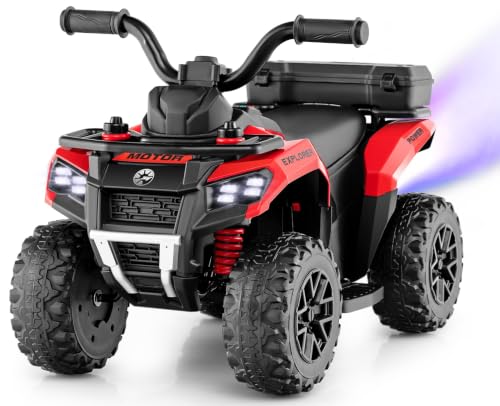 OLAKIDS 6V Kids ATV with Spray Function Best for 18 months-3 years | 18+ months, parent-controlled | 8.4out of 10 | $89.99Amazon #ad disclosure |
| 2 | 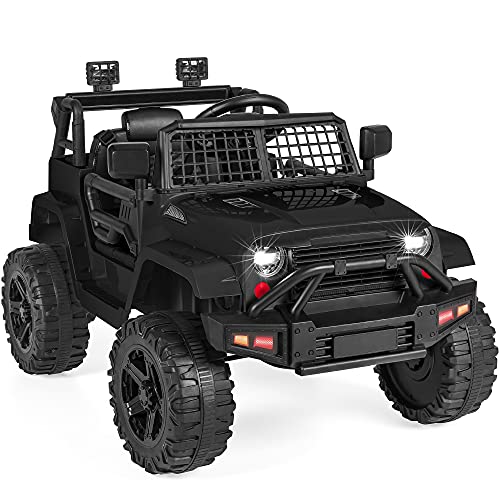 Best Choice Products 12V Kids Ride-On Car Best for 3-5 years | Age 3+, first 12V with a remote | 8.5out of 10 | $189.99Amazon #ad disclosure |
| 3 | 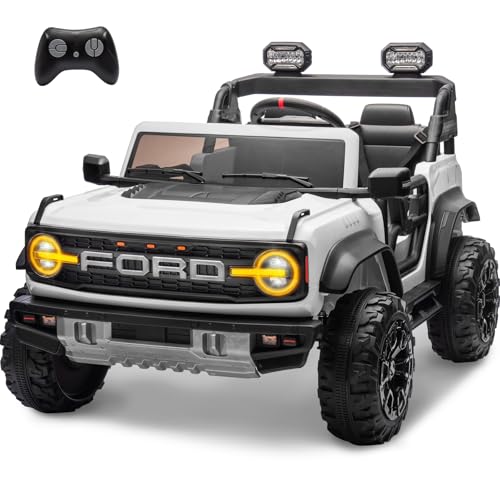 Seizeen 24V Ford Bronco Raptor 2-Seater Best for 6-8 years | 3-8 years, best-documented 24V | 9.3out of 10 | $349.90Amazon #ad disclosure |
| 4 | 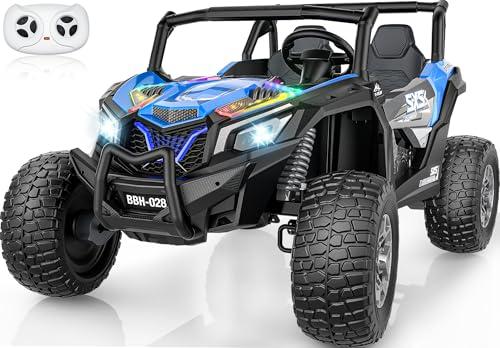 AceCruisers XXXL 4WD 24V 2-Seater Best for 9+ years | 3-14 years, longest useful life | 8.9out of 10 | $549.99Amazon #ad disclosure |
Scores are our own editorial ratings against the published rubric on how we pick. They are not customer ratings and they are not Amazon’s.
Ride-on toys are sold by age and constrained by weight, and the two rarely line up. A listing that says “ages 3-8” and “66 lb maximum” is describing a vehicle that fits a three-year-old comfortably, a five-year-old adequately, and an eight-year-old not at all — an average US eight-year-old weighs around 56 lb, and one at the 90th percentile weighs about 80 lb.
So the useful question is not “what age is this for?” but “what does my child weigh, and how much headroom does this leave?” This chart answers it in both directions.
The chart
Weight band, voltage and seats by age
Weight bands are the 10th to 90th percentile ranges from the CDC clinical growth charts for US children, rounded to the nearest pound.
| Child’s age | Weight band to shop in | Voltage | Seats | Remote? | Our roundup |
|---|---|---|---|---|---|
| 1 year | 22 – 30 lb | None or 6V | 1 | Strongly yes | 1-year-olds |
| 2 years | 26 – 34 lb | 6V | 1 | Strongly yes | 2-year-olds |
| 3 years | 30 – 40 lb | 6V or 12V | 1 | Yes | 3-year-olds |
| 4 years | 34 – 45 lb | 12V | 1 or 2 | Useful | 4-year-olds |
| 5 years | 38 – 52 lb | 12V | 1 or 2 | Optional | 5-year-olds |
| 6 years | 42 – 58 lb | 12V or 24V | 2 | Optional | 6-year-olds |
| 7 years | 46 – 66 lb | 24V | 2 | Rarely needed | 7-year-olds |
| 8 years | 50 – 75 lb | 24V | 2 | No | 8-year-olds |
| 9 – 10 years | 56 – 90 lb | 24V or 36V | 2 | No | 8–10-year-olds |
| 11+ years | 70 – 120 lb | 36V | 1 – 2 | No | Big kids |
Weight bands are the 10th–90th percentile ranges from the CDC’s clinical growth charts for US children, rounded. Use your child’s actual current weight, not their age — that is the whole point of the table.
Read the band, then add headroom. If your four-year-old weighs 40 lb, a vehicle with a 44 lb limit is already nearly exhausted — it will be over the limit within a year. A 66 lb limit gives you until about age seven. A 130 lb limit will outlast their interest.
The second constraint
Seat width, and why it is usually hidden
Weight is the limit that fails catastrophically; seat width is the one that fails quietly. A child who is within the weight limit but too wide or too tall for the seat simply stops using the vehicle, and nobody ever works out why.
Most listings do not publish a seat width at all. Of the vehicles in our registry, the ones that do span 15 to 22 inches, and the figure correlates closely with the rest of the spec sheet: a seller who measures the seat tends to publish the run time too. The relevant numbers from our registry:
- 15 in — a single-seat 12V truck. Comfortable to about age five.
- 19-20 in — the standard 24V two-seat bench. Two children up to about six, or one older child with room.
- 21-22 in — the widest benches here. Two six-to-eight-year-olds, or one child well into double figures.
If a listing gives no seat width, the overall vehicle dimensions are a usable proxy: a ride-on under 40 inches long is a single-seater for a child under five regardless of what the age range claims.
By age
What to buy at each age, and why
One and two years old
At this age the child cannot reliably steer, cannot judge distance, and will not stop when asked. Everything else follows from that. You want a top speed under 2 mph, a parent remote or a push handle, and a seat belt. 6V is the right class, and unpowered foot-to-floor ride-ons are a genuinely good option — nothing to charge, nothing to fail, and the child supplies the brakes.
The 44 lb limit on most 6V vehicles is not a constraint yet: a two-year-old at the 90th percentile weighs around 34 lb. See 1-year-olds, 2-year-olds and first ride-on toys.
Three to five years old
This is where 12V takes over and where most families buy. The child can steer, understands a pedal, and will mostly stop when told — but not reliably enough to skip the remote. Look for a 55 to 77 lb limit, a speed under 3.5 mph or a lockable low setting, and a three-point belt rather than a lap strap.
Three is also the age at which the gap between a vehicle’s marketing and its specification is widest, because a 12V car marketed at “3-8 years” is really a 3-5 vehicle. See 3-year-olds, 4-year-olds and 5-year-olds.
Six to eight years old
Most 12V vehicles are now out of weight, out of width, or simply too slow to hold interest. 24V is the class: 110 to 135 lb limits, 4 to 6 mph, a 20-inch bench that takes a friend. The remote becomes optional, but the speed is now fast enough that an enclosed space matters more than it did.
See 6-year-olds, 7-year-olds and 8-year-olds.
Nine years and up
Here the market splits. Either a large 24V two-seater with a genuinely high weight limit — 220 lb at the top of our registry, with a 22-inch adjustable seat and a stated range to fourteen years — or a 36V dirt bike, which is a different proposition entirely and needs a helmet.
See 8-10-year-olds, ride-on toys for big kids and kids dirt bikes.
Longevity
How long a ride-on actually lasts
Two separate clocks run on a ride-on: the weight clock and the interest clock. The weight clock is predictable. A child gains roughly 4 to 6 lb a year between three and eight, so a vehicle bought with 20 lb of headroom has about four years in it, and one bought with 5 lb of headroom has one.
The interest clock is shorter and harder to predict, but speed is the main driver. A child who has outgrown a vehicle’s top speed stops using it long before they outgrow its seat. That is why a 2.5 mph 12V car bought for a five-year-old is often abandoned within a year while the same car bought for a three-year-old lasts three.
Battery life is the third factor and the one you can actually fix. A ride-on whose battery no longer holds charge is not finished; it needs a $40 part. There is a full treatment on how long Power Wheels last and the replacement options on ride-on battery replacement.
Every pick in full
The picks, in detail
Each entry below carries the same nine specifications, taken from that model’s own current listing. Rows reading not stated by maker are specs the manufacturer does not publish — we show the gap rather than filling it in.
#1 · Best for 18 months-3 years
8.4 / 10
OLAKIDS 6V Kids ATV with Spray Function
OLAKIDS
#ad · Price as of November 8, 2026 · how this is funded
The only 6V quad here with a parent remote that overrides the pedal — the single most useful safety feature at this age.
1.24 mph with a parent remote that overrides the pedal. At eighteen months the remote is the whole point, and this is the only 6V quad here that has one.
The nine specs
Source: the manufacturer's own published specifications on the current Amazon listing.
Our scoring
- Fit at age9.0
- Safety9.0
- Spec disclosure7.5
- Value8.0
What works
- Remote mode overrides manual mode, with an emergency brake button
- Publishes capacity (4.5Ah) and charge time — most 6V listings don't
- 3-point seat belt and rear suspension springs
- 15W motors with slow-start
What doesn’t
- Weight limit is not published anywhere on the listing
- ~45 min is short; plan on one session per charge
- The water-mist feature needs refilling to stay interesting
#2 · Best for 3-5 years
8.5 / 10
Best Choice Products 12V Kids Ride-On Car
Best Choice Products
The default first 12V car: parent remote, 2.8 mph, and a 61 lb limit stated plainly rather than hidden in a dimensions line.
A 61 lb limit and 2.8 mph with a remote: sized and geared for exactly the age it claims, and the limit is stated plainly instead of being buried.
The nine specs
Source: the manufacturer's own published specifications on the current Amazon listing.
Our scoring
- Fit at age9.0
- Safety8.5
- Spec disclosure7.5
- Value8.5
What works
- Parent remote with forward and reverse
- Lockable doors, adjustable seatbelt, spring suspension
- Non-deflating plastic wheels with traction tread
- Small footprint: 39.25 x 26 x 26 in
What doesn’t
- Neither run time nor charge time is published
- 61 lb is the lowest limit of the 12V cars here
- No amp-hour figure
#3 · Best for 6-8 years
9.3 / 10
Seizeen 24V Ford Bronco Raptor 2-Seater
Seizeen
132 lb, 4.4 mph and a 1-2 hour run time on a licensed Bronco — the most complete 24V sheet in the registry.
132 lb across two seats with a stated 3-8 year range, 4.4 mph and a published run time. Eight of nine specs disclosed, which is the best in the registry.
The nine specs
Source: the manufacturer's own published specifications on the current Amazon listing.
Our scoring
- Fit at age9.5
- Safety9.0
- Spec disclosure9.5
- Value8.5
What works
- Eight of nine specs published
- 132 lb limit is the practical two-child figure
- Officially licensed Ford Bronco Raptor
- 4 x 90W motors with a safety belt per seat
What doesn’t
- Charge time is the one spec missing
- 4.4 mph on grass will drain a 7Ah pack faster than the stated 1-2 hr
- Large footprint — measure your storage before buying
#4 · Best for 9+ years
8.9 / 10
AceCruisers XXXL 4WD 24V 2-Seater
AceCruisers
220 lb and a stated 3-14 year range — the only two-seater here that genuinely claims to fit a teenager.
A 220 lb limit and a stated 3-14 year range on a 22-inch adjustable seat. The only vehicle here that honestly claims to still fit a child at twelve.
The nine specs
Source: the manufacturer's own published specifications on the current Amazon listing.
Our scoring
- Fit at age9.5
- Safety8.0
- Spec disclosure8.5
- Value8.0
What works
- 220 lb limit, double most two-seaters
- 22-inch adjustable seat and a stated 3-14 year range
- Full 1.9-5.5 mph band published
- 4WD with 200W motors
What doesn’t
- No run time published, and at 220 lb that is the figure you want
- A 7Ah pack carrying 220 lb will be short-lived
- Most expensive vehicle in the registry
Questions parents ask
Frequently asked questions
What age is a 12V ride-on car for?
How do I know if my child is too big for a ride-on toy?
Can a 2-year-old use a 12V ride-on car?
What weight limit do I need for two children?
Are ride-on age ranges regulated?
Where these numbers come from
Sources
- CDC Clinical Growth Charts (weight-for-age, 2 to 20 years)
- CPSC — Age Determination Guidelines for toys
- ASTM F963 — Standard Consumer Safety Specification for Toy Safety
Product specifications on this page are taken from each manufacturer’s own published listing. Where a manufacturer does not publish a figure, the row reads “not stated by maker” rather than carrying an estimate.
Read next