Best first ride-on
Best first ride-on toys
The first one matters most, because getting it wrong puts a child off. Here is what to buy at each stage and the three mistakes that cause most of the regret.
Written by
Mike M. · owner, Iron Mako Media
Published November 7, 2026 · last updated November 8, 2026 · specs checked against each maker’s current listing
How this page is funded: we earn a commission when you buy through our Amazon links, at no extra cost to you. It does not change which products we pick or what we say about them — the scoring rubric is published and applied the same way to every product. Full disclosure.
Price checked November 8, 2026
Verdict first
Quick picks
The first one matters most, because getting it wrong puts a child off. Here is what to buy at each stage and the three mistakes that cause most of the regret.. Tap any row to jump to that model’s full write-up below, or go straight to Amazon from the price column. Prices last checked November 8, 2026.
| # | Product | Best for | Score | Price |
|---|---|---|---|---|
| 1 | 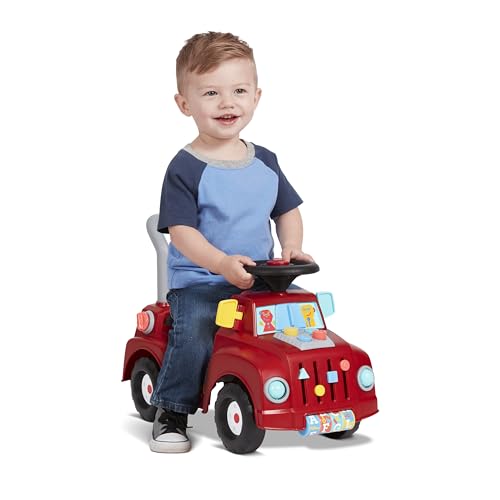 Radio Flyer Tinker Truck Best at 12-18 months | 1-3 years, walker to ride-on | 8.4out of 10 | $49.99Amazon #ad disclosure |
| 2 | 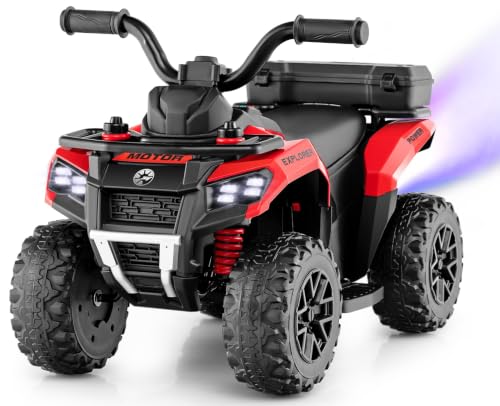 OLAKIDS 6V Kids ATV with Spray Function Best at 18-24 months | 18+ months, parent-controlled | 8.5out of 10 | $89.99Amazon #ad disclosure |
| 3 | 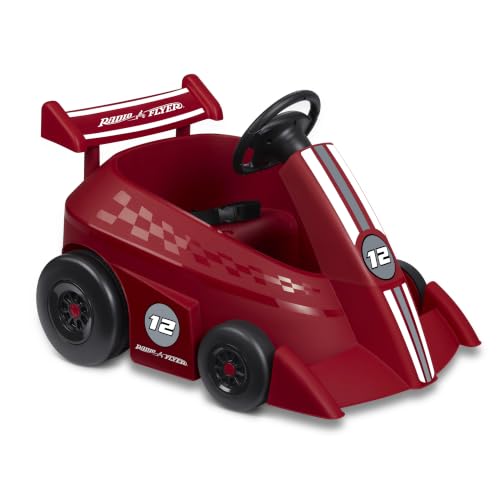 Radio Flyer Grow with Me Racer Best to buy once | 1.5-4 years, grows with the child | 8.6out of 10 | $209.99Amazon #ad disclosure |
| 4 | 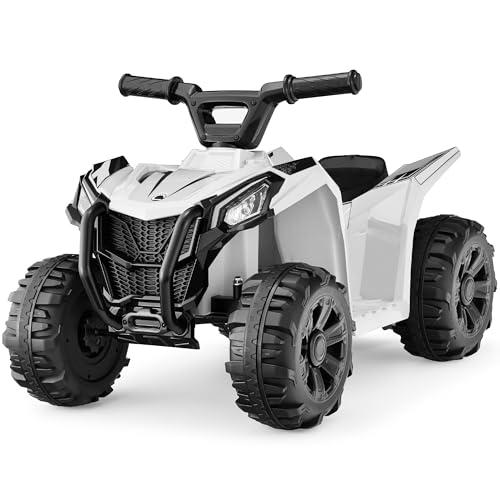 Best Choice Products 6V Kids Electric Ride-On ATV Best at 2-3 years | 1.5-3 years, longest 6V run time | 8.3out of 10 | $89.98Amazon #ad disclosure |
| 5 | 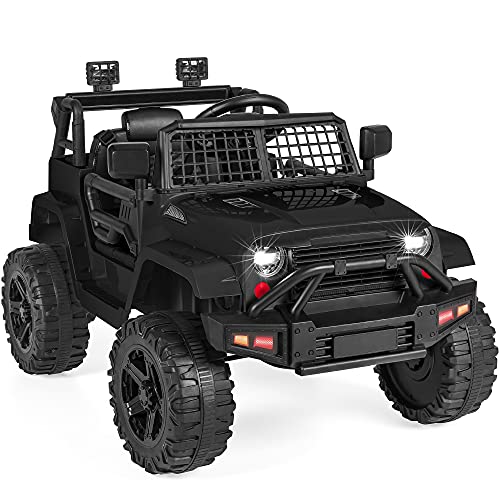 Best Choice Products 12V Kids Ride-On Car Best at 3-4 years | Age 3+, first 12V with a remote | 8.5out of 10 | $189.99Amazon #ad disclosure |
| 6 | 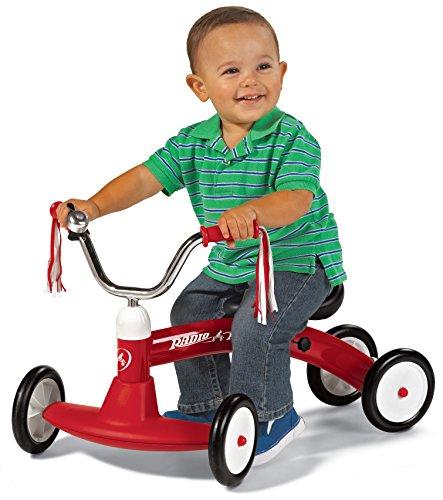 Radio Flyer Scoot About Best to test the water | 1-3 years, no battery | 8.3out of 10 | $44.99Amazon #ad disclosure |
Scores are our own editorial ratings against the published rubric on how we pick. They are not customer ratings and they are not Amazon’s.
The first ride-on sets whether a child enjoys the category or ignores it, and the failure mode is consistent: a vehicle bought for the age on the box rather than the stage the child is at, which is then either too fast to be allowed or too advanced to operate. Either way it sits unused and everyone concludes the child was not interested.
By stage
What to buy when
Twelve to eighteen months
Unpowered. A child this age cannot coordinate a pedal with steering, so a powered vehicle is an adult operating a remote while the child sits. A three-in-one walker or a foot-to-floor scoot gives them agency immediately and builds the leg strength and spatial judgment a powered vehicle needs later.
Eighteen months to two
6V, and only with a parent remote. This is where powered becomes genuinely viable: the child understands cause and effect at the pedal but has no judgment about obstacles. The remote is not a convenience at this age, it is the reason the purchase works. Under 1.5 mph.
Two to three
6V self-drive. Steering is reliable, stopping is mostly reliable. The remote becomes useful rather than essential. Look for a 66 lb limit if you can find one — it roughly doubles the useful life over the common 44 lb. See 2-year-olds.
Three to four
12V with a remote and a lockable low setting. This is where most first purchases happen and where the market is best: a 66 lb limit, a 7Ah battery, a three-point belt and 2.5 to 3 mph is widely available between $130 and $240. See 3-year-olds.
The mistakes
Three errors that cause most of the regret
- Too fast. A 4 mph vehicle for a two-year-old is a vehicle the parents refuse to let them use at full speed, which the child notices. Match the top speed to the age — see how fast do ride-on toys go.
- Wrong class for the yard. A 6V vehicle on a grass-only yard barely moves, and the child blames the vehicle rather than the physics. If it is grass, 12V is the floor. See the terrain guide.
- Buying up an age bracket. “They’ll grow into it” does not work with ride-ons, because the vehicle has to be usable now to be interesting now. Buy for today and pick a wide age range if you want longevity.
Buy once
If you only want to buy one
Two approaches work. A convertible — parent-pushed becoming self-drive — covers 1.5 to 4 genuinely, and is the only vehicle in our registry that spans that stage honestly. Or buy 12V with a wide speed band at three: a vehicle running 1.3 to 2.7 mph can be set slow now and opened up in a year, and a 66 lb limit takes it to about seven.
What does not work is buying 24V early. The capability is real and the child cannot use it for three years. See do kids outgrow ride-on toys.
Related: how to pick a ride-on toy, ride-on toy gifts and 1-year-olds.
Every pick in full
The picks, in detail
Each entry below carries the same nine specifications, taken from that model’s own current listing. Rows reading not stated by maker are specs the manufacturer does not publish — we show the gap rather than filling it in.
#1 · Best at 12-18 months
8.4 / 10
Radio Flyer Tinker Truck
Radio Flyer
#ad · Price as of November 8, 2026 · how this is funded
A 3-in-1 walker, ride-on and push car for 1-3s with a 42 lb limit — the first-birthday option.
Walker, ride-on and push car in one, with a published 42 lb limit and no battery. Useful from the first unsteady steps rather than waiting for readiness.
The nine specs
Source: the manufacturer's own published specifications on the current Amazon listing.
Our scoring
- Fit for stage9.5
- Safety9.5
- Spec disclosure7.5
- Value9.0
What works
- Three configurations: push walker, ride-on and push car
- 42 lb limit published
- Useful from first steps, not just first rides
- Radio Flyer build
What doesn’t
- Unpowered
- 42 lb limit
- Outgrown by about age 3
#2 · Best at 18-24 months
8.5 / 10
OLAKIDS 6V Kids ATV with Spray Function
OLAKIDS
#ad · Price as of November 8, 2026 · how this is funded
The only 6V quad here with a parent remote that overrides the pedal — the single most useful safety feature at this age.
1.24 mph with a remote that overrides the pedal and an emergency brake. This is the point where powered becomes viable, and only because of the remote.
The nine specs
Source: the manufacturer's own published specifications on the current Amazon listing.
Our scoring
- Fit for stage9.0
- Safety9.5
- Spec disclosure7.0
- Value8.5
What works
- Remote mode overrides manual mode, with an emergency brake button
- Publishes capacity (4.5Ah) and charge time — most 6V listings don't
- 3-point seat belt and rear suspension springs
- 15W motors with slow-start
What doesn’t
- Weight limit is not published anywhere on the listing
- ~45 min is short; plan on one session per charge
- The water-mist feature needs refilling to stay interesting
#3 · Best to buy once
8.6 / 10
Radio Flyer Grow with Me Racer
Radio Flyer
#ad · Price as of November 8, 2026 · how this is funded
Converts from a parent-pushed ride-on to a 6V powered racer as the child grows — the only vehicle here that spans 1.5 to 4 years honestly.
Parent-pushed at eighteen months, 6V self-drive at three, across a stated 1.5 to 4 year range. If you want to buy one vehicle for the whole stage, this is it.
The nine specs
Source: the manufacturer's own published specifications on the current Amazon listing.
Our scoring
- Fit for stage9.5
- Safety9.0
- Spec disclosure6.5
- Value8.0
What works
- Multiple modes across a genuine 1.5-4 year span
- 2 mph is the right speed for the youngest mode
- Radio Flyer build and parts support
- Parent push handle and control
What doesn’t
- Weight limit is not published, which matters on a convertible
- No run time or charge time
- Costs more than a plain 6V car
#4 · Best at 2-3 years
8.3 / 10
Best Choice Products 6V Kids Electric Ride-On ATV
Best Choice Products
The most complete 6V spec sheet in this price band: speed, run time and capacity are all published, which is rarer than it should be.
1.8 mph, a 44 lb limit and 1-2 hours of published run time with a removable battery. Well documented, which matters most on a first purchase.
The nine specs
Source: the manufacturer's own published specifications on the current Amazon listing.
Our scoring
- Fit for stage9.0
- Safety8.0
- Spec disclosure8.5
- Value9.0
What works
- 1-2 hr run time is the longest published figure at 6V
- Removable battery, so you can charge it off the vehicle
- 4-wheel suspension and treaded tires for grass and dirt
- One-button control a toddler can actually work
What doesn’t
- No parent remote
- Amp-hour capacity is not published, so run time can't be sanity-checked
- 1.8 mph is quick for the youngest end of the stated range
#5 · Best at 3-4 years
8.5 / 10
Best Choice Products 12V Kids Ride-On Car
Best Choice Products
The default first 12V car: parent remote, 2.8 mph, and a 61 lb limit stated plainly rather than hidden in a dimensions line.
The default first 12V: 2.8 mph, a 61 lb limit stated plainly, a parent remote, and a compact body that stores. Sized and geared for exactly the age it claims.
The nine specs
Source: the manufacturer's own published specifications on the current Amazon listing.
Our scoring
- Fit for stage9.0
- Safety9.0
- Spec disclosure7.5
- Value8.5
What works
- Parent remote with forward and reverse
- Lockable doors, adjustable seatbelt, spring suspension
- Non-deflating plastic wheels with traction tread
- Small footprint: 39.25 x 26 x 26 in
What doesn’t
- Neither run time nor charge time is published
- 61 lb is the lowest limit of the 12V cars here
- No amp-hour figure
#6 · Best to test the water
8.3 / 10
Radio Flyer Scoot About
Radio Flyer
#ad · Price as of November 8, 2026 · how this is funded
No battery, no charger, nothing to go wrong: a foot-to-floor scoot with a 42 lb limit for 1-3s.
The cheapest way to find out whether your child takes to riding before you spend $150 finding out. 42 lb, adjustable seat, nothing to charge.
The nine specs
Source: the manufacturer's own published specifications on the current Amazon listing.
Our scoring
- Fit for stage9.5
- Safety9.5
- Spec disclosure7.5
- Value9.5
What works
- Nothing to charge, and nothing that stops working
- 42 lb limit published
- Adjustable seat and a wide, stable base
- The cheapest way to find out whether your child likes riding
What doesn’t
- No power — the appeal fades once friends have batteries
- 42 lb is reached by about age 3
- Indoor and smooth-surface use only
Questions parents ask
Frequently asked questions
What is the best first ride-on toy?
What age should a child get their first ride-on toy?
Should a first ride-on be powered or unpowered?
Can I buy a bigger ride-on for a child to grow into?
What is the most common first ride-on mistake?
Where these numbers come from
Sources
- CDC Clinical Growth Charts (weight-for-age percentiles)
- CPSC — Age Determination Guidelines for toys
- ASTM F963 — Standard Consumer Safety Specification for Toy Safety
Product specifications on this page are taken from each manufacturer’s own published listing. Where a manufacturer does not publish a figure, the row reads “not stated by maker” rather than carrying an estimate.
Read next