Weight limit reference
Ride-on toy weight limits
The weight limit is the most important specification on a ride-on and the one most listings bury. Here is what the number means, what fails when you pass it, and every published limit we could find.
Written by
Mike M. · owner, Iron Mako Media
Published October 16, 2026 · last updated November 8, 2026 · specs checked against each maker’s current listing
Price checked November 8, 2026
Verdict first
Quick picks
The weight limit is the most important specification on a ride-on and the one most listings bury. Here is what the number means, what fails when you pass it, and every published limit we could find.. Tap any row to jump to that model’s full write-up below, or go straight to Amazon from the price column. Prices last checked November 8, 2026.
| # | Product | Best for | Score | Price |
|---|---|---|---|---|
| 1 | 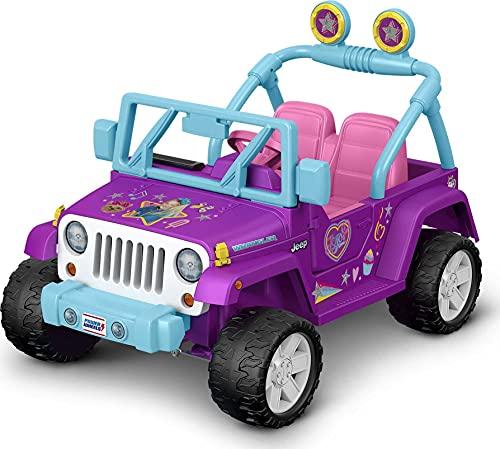 Power Wheels JoJo Siwa Jeep Wrangler 12V Highest 12V limit | 3-7 years, genuine Power Wheels | 8.7out of 10 | $399.99Amazon #ad disclosure |
| 2 | 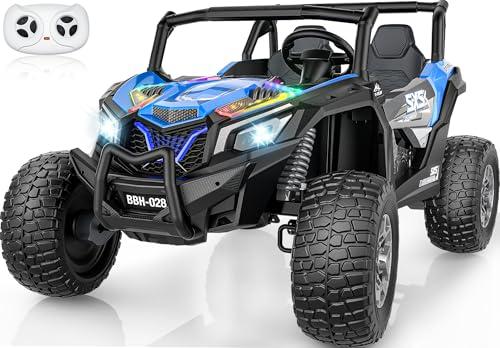 AceCruisers XXXL 4WD 24V 2-Seater Highest limit overall | 3-14 years, longest useful life | 8.9out of 10 | $549.99Amazon #ad disclosure |
| 3 | 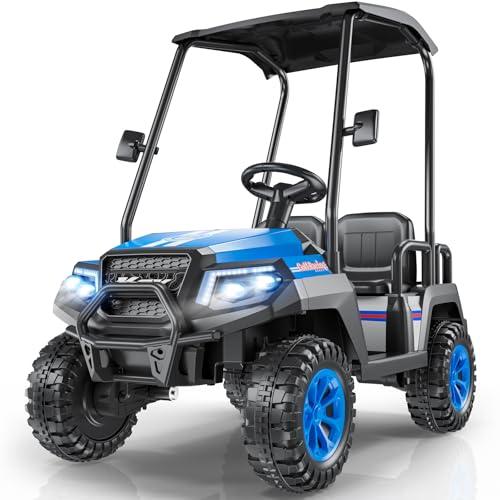 LIGIANT 24V 4-Seater Golf Cart Highest total load | Groups, highest weight limit | 8.3out of 10 | $339.97Amazon #ad disclosure |
| 4 | 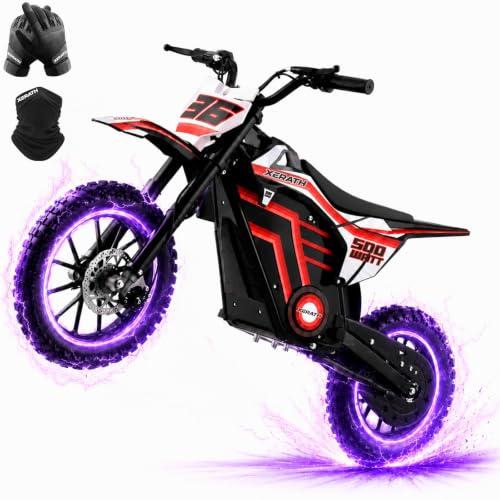 XERATH 36V 500W Electric Dirt Bike Highest rider weight | 6-13 years, longest range | 8.6out of 10 | $459.99Amazon #ad disclosure |
Scores are our own editorial ratings against the published rubric on how we pick. They are not customer ratings and they are not Amazon’s.
Of the nine specifications we publish for every product on this site, the weight limit is the one that most often decides whether a purchase works. It is also the one most frequently missing: of the vehicles we checked, roughly a third do not publish it anywhere on the listing, and some of those are two-seaters, where it matters most.
That is not an accident. The weight limit is the least flattering number on a ride-on spec sheet, because it is the one that contradicts the age range in the headline.
What it is
What the number actually rates
A ride-on weight limit is a composite rating covering three things at once:
- The frame and the seat mount. Most ride-ons are molded polypropylene over a steel or aluminum subframe. The limit reflects the load the seat pan and its mounting points can carry repeatedly, including the shock of a child dropping into the seat.
- The wheel hubs. On almost every vehicle below $300 the wheels are plastic, retained by a push-on cap. This is the single most common failure point, and it fails at the hub where the axle passes through.
- The gearbox teeth. The gearbox converts a fast, weak motor into a slow, strong axle. The teeth are usually nylon. Overload them and they round off, which is why an overloaded ride-on starts to whine and then simply stops driving.
The electrical side matters too. A motor working against more load than it was specified for draws more current, runs hotter, and either trips the thermal fuse or cooks its windings. The vehicles that handle weight properly do it with more motors rather than bigger ones — four 200W units instead of two 25W ones.
The evidence
What exceeding the limit actually does
It is worth being precise here, because the honest answer is less dramatic and more expensive than people expect. An overloaded ride-on does not usually collapse. It degrades, in a recognizable sequence:
- It gets slow. The first symptom is a vehicle that no longer reaches its stated speed, especially from a standstill and on any incline.
- Run time halves. More current for the same battery means a vehicle that used to run an hour now runs thirty minutes, which gets blamed on the battery.
- Something gets hot. The motors, the speed controller, or the connector. A warm connector is a warning; a deformed one is a fire risk.
- The gearbox gives up. A whine under load, then a click, then one side stops driving. By this point the fix is a new motor and gearbox pair.
Every step in that sequence gets misdiagnosed as battery failure, which is why a lot of ride-ons get a new battery they did not need. The diagnostic path is on ride-on car won’t drive, and the replacement gearboxes are on motor upgrades.
By class
Published weight limits by voltage
| Class | Lowest published | Most common | Highest published |
|---|---|---|---|
| Unpowered | 42 lb | 42-44 lb | 44 lb |
| 6V | 44 lb | 44 lb | 66 lb |
| 12V | 55 lb | 66 lb | 130 lb |
| 24V | 66 lb | 110-132 lb | 264 lb (4-seat) |
| 36V | 132 lb | 140 lb | 176 lb |
Figures are the published limits from the current manufacturer listings of the 126 products in our registry. Where a product publishes no limit, it is excluded from this table rather than estimated.
The 12V row is where the interesting variance sits. A 55 lb limit and a 130 lb limit can both appear on a 12V car at similar money, and the difference is entirely in the frame and gearbox construction. The 130 lb vehicles in our registry are the genuine Power Wheels and the Peg Perego Gator — brands with their own tooling rather than a rebadged generic platform.
Two seats
The two-seater trap
This is worth its own section because it catches people constantly. On almost every two-seat ride-on, the published weight limit is the total across both seats, not per seat. Our registry contains two-seat vehicles with 66 lb limits. Two average five-year-olds weigh roughly 90 lb between them.
So a two-seat body with a 66 lb limit is a one-child vehicle with a decorative second seat. It will carry two toddlers. It will not carry two school-age children, and loading it with both will produce the degradation sequence above.
The honest two-child figures start at 110 lb and are comfortable at 130 lb or above. Those vehicles and the reasoning behind the numbers are on 2-seater ride-on cars, and the single-versus-double decision is laid out on 1-seater vs 2-seater.
Buying
How to use the limit when you shop
- Weigh the child. Today’s weight, on a scale, not an estimate from their last check-up.
- Add growth. Children gain roughly 4 to 6 lb a year from three to eight. Multiply by the number of years you want the vehicle to last.
- Add 10% headroom. Then find a vehicle whose published limit is above that total.
- If no limit is published, treat it as the class minimum. A 12V car with no stated limit should be assumed to be 55 lb until the seller says otherwise. That is not cynicism; it is what the unpublished figure usually turns out to be.
And if two children will share it, do the arithmetic for both of them. The age and size chart gives the percentile bands to work from.
Every pick in full
The picks, in detail
Each entry below carries the same nine specifications, taken from that model’s own current listing. Rows reading not stated by maker are specs the manufacturer does not publish — we show the gap rather than filling it in.
#1 · Highest 12V limit
8.7 / 10
Power Wheels JoJo Siwa Jeep Wrangler 12V
Power Wheels
#ad · Price as of November 8, 2026 · how this is funded
Genuine Fisher-Price Power Wheels: a 130 lb limit, a 5 mph high setting and a lockable low — the specs that made the brand the default.
130 lb on a 12V vehicle, which is double the class norm. Genuine Power Wheels frames and gearboxes are built to a different standard and the limit reflects it.
The nine specs
Source: the manufacturer's own published specifications on the current Amazon listing.
Our scoring
- Weight limit10.0
- Build quality9.0
- Spec disclosure7.0
- Value7.5
What works
- 130 lb limit — the highest of any 12V vehicle here
- Two speeds with a parent-lockable high setting
- Real Power Wheels drivetrain and parts channel
- Two seats
What doesn’t
- No parent remote — Power Wheels has never fitted one
- Run time and charge time not published
- 5 mph is genuinely fast; the high-speed lock matters
#2 · Highest limit overall
8.9 / 10
AceCruisers XXXL 4WD 24V 2-Seater
AceCruisers
220 lb and a stated 3-14 year range — the only two-seater here that genuinely claims to fit a teenager.
220 lb with a stated 3-14 year range and a 22-inch adjustable seat. If longevity is the goal, this is the specification that delivers it.
The nine specs
Source: the manufacturer's own published specifications on the current Amazon listing.
Our scoring
- Weight limit10.0
- Build quality8.5
- Spec disclosure8.5
- Value7.5
What works
- 220 lb limit, double most two-seaters
- 22-inch adjustable seat and a stated 3-14 year range
- Full 1.9-5.5 mph band published
- 4WD with 200W motors
What doesn’t
- No run time published, and at 220 lb that is the figure you want
- A 7Ah pack carrying 220 lb will be short-lived
- Most expensive vehicle in the registry
#3 · Highest total load
8.3 / 10
LIGIANT 24V 4-Seater Golf Cart
LIGIANT
264 lb across four seats — the only vehicle here that genuinely takes a group, and the limit is published.
264 lb across four seats. The only vehicle here designed around a group rather than a child, though with no published run time you are buying blind on battery life.
The nine specs
Source: the manufacturer's own published specifications on the current Amazon listing.
Our scoring
- Weight limit10.0
- Build quality7.5
- Spec disclosure7.0
- Value8.0
What works
- 264 lb maximum load — double most two-seaters
- Four seats and a removable roof
- Full 1.86-4.35 mph band published
- 4WD
What doesn’t
- No run time published, and with 264 lb aboard that matters most here
- A 7Ah pack moving 264 lb will be slow and short-lived
- Largest footprint in the registry
#4 · Highest rider weight
8.6 / 10
XERATH 36V 500W Electric Dirt Bike
XERATH
A 15Ah battery and a 165 lb limit with a parent-controlled speed key — the longest-range bike here, at 17.4 mph.
165 lb on a single-rider dirt bike, with a parent-controlled speed key. The limit here is about frame strength at speed, not just load.
The nine specs
Source: the manufacturer's own published specifications on the current Amazon listing.
Our scoring
- Weight limit9.5
- Build quality8.5
- Spec disclosure7.5
- Safety8.5
What works
- 15Ah battery with a stated 23.6-mile range
- 165 lb limit — the highest of any vehicle here
- Parent-controlled speed key limits the top speed
- Honest 6-13 year range
What doesn’t
- 17.4 mph is the fastest in the registry; full protective gear required
- No run time or charge time published
- Most expensive product in the registry
Questions parents ask
Frequently asked questions
What is the weight limit on a Power Wheels?
What happens if a child is over the weight limit?
Is the weight limit per seat or for the whole vehicle?
Can I upgrade a ride-on to carry more weight?
Why do so many listings not publish a weight limit?
Where these numbers come from
Sources
- CDC Clinical Growth Charts (weight-for-age percentiles)
- ASTM F963 — Standard Consumer Safety Specification for Toy Safety
- CPSC — Toy safety business guidance
Product specifications on this page are taken from each manufacturer’s own published listing. Where a manufacturer does not publish a figure, the row reads “not stated by maker” rather than carrying an estimate.
Read next