Remote reference
The parent remote, explained
A parent remote is the most useful safety feature on a ride-on and the least explained. Here is what it controls, how far it reaches, and what happens when the child fights it.
Written by
Mike M. · owner, Iron Mako Media
Published October 20, 2026 · last updated November 6, 2026 · specs checked against each maker’s current listing
Price checked November 8, 2026
Verdict first
Quick picks
A parent remote is the most useful safety feature on a ride-on and the least explained. Here is what it controls, how far it reaches, and what happens when the child fights it.. Tap any row to jump to that model’s full write-up below, or go straight to Amazon from the price column. Prices last checked November 8, 2026.
| # | Product | Best for | Score | Price |
|---|---|---|---|---|
| 1 | 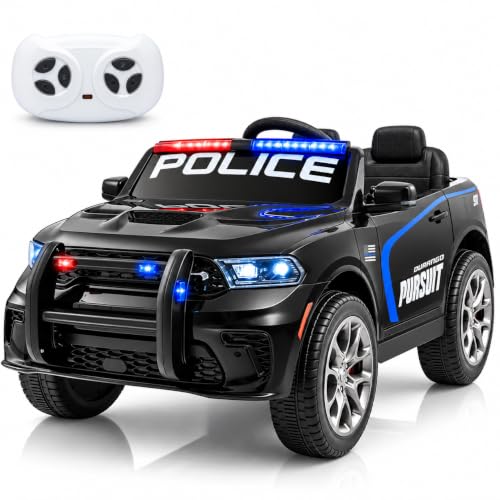 Maybird 12V Dodge Durango Pursuit Police Car Best remote control | Age 3+, graduated speed control | 8.7out of 10 | $164.99Amazon #ad disclosure |
| 2 | 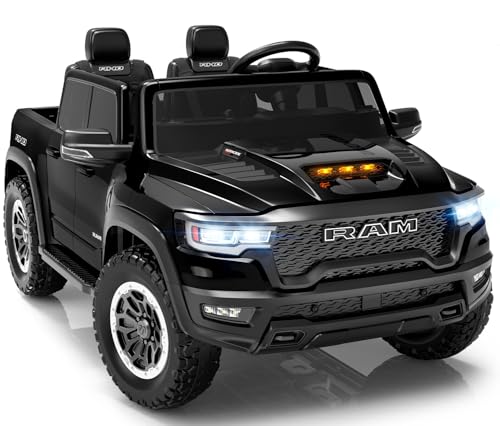 First Ride On 24V RAM 1500 RHO 2-Seater Longest published range | 3-8 years, widest seat and remote range | 9.0out of 10 | $389.99Amazon #ad disclosure |
| 3 | 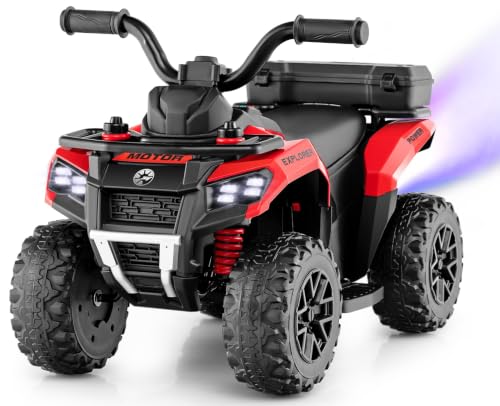 OLAKIDS 6V Kids ATV with Spray Function Best remote at 6V | 18+ months, parent-controlled | 8.4out of 10 | $89.99Amazon #ad disclosure |
| 4 | 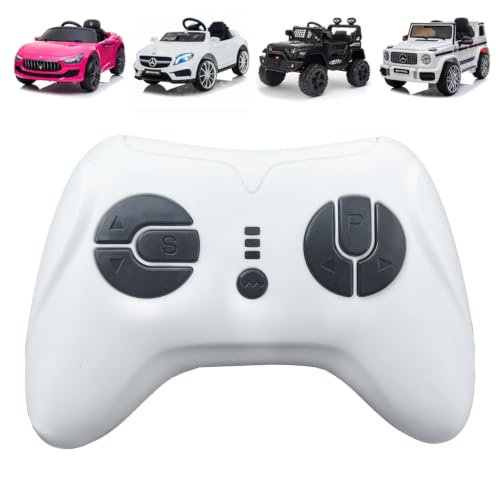 JR1839FCC Replacement Remote Control for Power Wheels Best replacement remote | JR1839 receiver pairing | 8.3out of 10 | $11.77Amazon #ad disclosure |
Scores are our own editorial ratings against the published rubric on how we pick. They are not customer ratings and they are not Amazon’s.
If your child is under five, the parent remote is the specification to buy on — ahead of top speed, ahead of styling, arguably ahead of voltage. It is the only feature that lets you stop the vehicle from where you are standing, and at a 3 mph walking pace that is the difference between supervision and pursuit.
Mechanics
What the remote actually does
Nearly every ride-on remote is a 2.4GHz transmitter paired to a receiver board inside the vehicle, in the same family as a hobby RC car. It gives the adult holding it, typically:
- Forward, reverse and steering. Full control of direction, independent of the steering wheel the child is holding.
- Speed selection. Usually three steps. On the best-documented vehicle in our registry those steps are published as 1.9, 2.5 and 3.1 mph; on most, the listing says “3-speed” and leaves you to guess.
- An emergency brake. A dedicated stop button, which on better units has priority over every other input.
- Mode priority. This is the important one — see below.
The key behavior
Override: why mode priority matters
The question worth asking of any remote-equipped vehicle is: what happens when the parent and the child give conflicting inputs?
On the vehicles that get this right, remote mode overrides manual mode. The moment you touch the remote, the pedal stops doing anything until you hand control back. A child who disagrees with your decision to stop can press the pedal as hard as they like and the car will not move. One listing in our registry states this explicitly and names the emergency brake button that enforces it.
On weaker implementations the two inputs are additive or last-wins, which means a determined four-year-old can out-pedal your stop command. There is no way to tell from a photograph. The listings that spell out the priority behavior are the ones to trust, and where it is not stated, test it in your driveway before the vehicle goes anywhere near a slope.
Range
How far a remote actually reaches
Two vehicles in our registry publish a figure: 98 feet and 65 feet. Every other remote-equipped vehicle says nothing, and in practice the unstated ones tend to be around 30 feet with clear line of sight.
That matters because 2.4GHz does not travel well through obstructions. A fence, a hedge, a parked car or the corner of a house all cut the usable range sharply, and the failure mode is not graceful — the vehicle simply stops responding while continuing on its last command. If your yard has corners the child can drive around, a published long range is worth paying for.
By age
When you need one, and when you don't
- Under 3: essential. A two-year-old cannot reliably steer away from an obstacle or stop on request. If a vehicle at this age has no remote, it needs to be slow enough that you can simply walk over and lift the child out — under about 1.5 mph.
- 3 to 5: strongly recommended. Steering is reliable by now; judgment is not. This is also the age band where the remote’s speed limiting earns its keep, because the child cannot reach it to change the setting.
- 6 to 8: useful but optional. Most children this age stop when told. The remote becomes a convenience rather than a safeguard, which is why most 24V vehicles still include one but nobody minds when they do not.
- Over 8: rarely used. A dirt bike at this age needs a speed key and a helmet rather than a remote, and almost none have one.
The remote-equipped vehicles across every age band are on ride-on toys with a parent remote, and the speed-by-age reasoning is on how fast do ride-on toys go.
Failures
When the remote stops working
Three faults, in order of how often they happen:
- Handset batteries. Almost always AA or AAA cells, and almost always the answer. Try this first.
- Lost pairing. Most receivers re-pair by powering the vehicle on while holding a button on the handset, but the exact sequence varies and is usually only in the paper manual. Search the receiver model number rather than the vehicle name.
- A lost handset. Replaceable for $12 to $13 — but only if you can match the receiver. Open the vehicle, find the board, and read the model number off it. The JR1839 family is the most common, and a replacement that names that number explicitly will pair; a generic “fits all ride-ons” remote is a gamble.
If the receiver board itself has failed, a new handset will not help. That diagnosis and the replacement parts are on replacement parts by brand, and the broader “it will not drive” path is on ride-on car won’t drive.
The gap
The brands that do not fit remotes
Two notable exceptions. Power Wheels has never fitted a parent remote to any vehicle, using a screw-in pedal limiter instead — which is genuinely the more tamper-proof speed control, just not a stopping mechanism. Peg Perego mostly does not either, though one model in our registry does. Quads and dirt bikes generally do not, because the riding position makes the remote-versus-rider conflict dangerous rather than useful.
If a remote is your priority, that steers you toward the generic 12V and 24V car market rather than the heritage brands. The trade is covered on Power Wheels vs Best Choice Products.
Every pick in full
The picks, in detail
Each entry below carries the same nine specifications, taken from that model’s own current listing. Rows reading not stated by maker are specs the manufacturer does not publish — we show the gap rather than filling it in.
#1 · Best remote control
8.7 / 10
Maybird 12V Dodge Durango Pursuit Police Car
Maybird
The clearest speed disclosure of any 12V car here: three named remote speeds (1.9, 2.5 and 3.1 mph) rather than a vague 3-speed claim.
Three named speed steps on the remote (1.9, 2.5 and 3.1 mph) plus a high-priority emergency brake. The only listing in our registry that publishes its speed ladder step by step.
The nine specs
Source: the manufacturer's own published specifications on the current Amazon listing.
Our scoring
- Remote function9.5
- Speed steps10.0
- Safety9.0
- Value8.0
What works
- Every remote speed step is published as a number
- Remote has a high-priority emergency brake
- Run time stated with the speed it applies to — almost nobody does this
- 80% pre-assembled; stated 20-minute build
What doesn’t
- Charge time is not published
- No amp-hour figure
- The 90-minute figure is the low-speed run time, not the 3.1 mph one
#2 · Longest published range
9.0 / 10
First Ride On 24V RAM 1500 RHO 2-Seater
First Ride On
#ad · Price as of November 8, 2026 · how this is funded
A 20-inch seat and a 98-foot remote range, both published — the two specs that actually decide whether a two-seater works in a big yard.
98 feet of stated remote range on a 132 lb two-seater. In a large yard that is the difference between useful supervision and jogging after the car.
The nine specs
Source: the manufacturer's own published specifications on the current Amazon listing.
Our scoring
- Remote function9.0
- Speed steps8.0
- Safety9.0
- Value8.0
What works
- Remote range stated as a number (98 ft), not just 'long range'
- 20-inch seat width published
- 60-120 min run time
- Officially licensed RAM 1500 RHO
What doesn’t
- Amp-hour capacity not published
- Charge time not published
- Most expensive truck in the registry
#3 · Best remote at 6V
8.4 / 10
OLAKIDS 6V Kids ATV with Spray Function
OLAKIDS
#ad · Price as of November 8, 2026 · how this is funded
The only 6V quad here with a parent remote that overrides the pedal — the single most useful safety feature at this age.
A remote that overrides the pedal on an 18-month vehicle, with an emergency brake button. Almost no 6V quad has one, and at that age it is the whole point.
The nine specs
Source: the manufacturer's own published specifications on the current Amazon listing.
Our scoring
- Remote function9.0
- Speed steps7.0
- Safety9.5
- Value8.0
What works
- Remote mode overrides manual mode, with an emergency brake button
- Publishes capacity (4.5Ah) and charge time — most 6V listings don't
- 3-point seat belt and rear suspension springs
- 15W motors with slow-start
What doesn’t
- Weight limit is not published anywhere on the listing
- ~45 min is short; plan on one session per charge
- The water-mist feature needs refilling to stay interesting
#4 · Best replacement remote
8.3 / 10
JR1839FCC Replacement Remote Control for Power Wheels
POLYNX
Carries the receiver model number (JR1839FCC) — the only way to buy a ride-on remote that will actually pair.
Carries the JR1839FCC receiver model number, which is the only way to buy a ride-on remote that will actually pair with your vehicle.
The nine specs
Source: the manufacturer's own published specifications on the current Amazon listing.
Our scoring
- Remote function8.0
- Compatibility9.5
- Value8.5
- Spec disclosure9.0
What works
- Receiver model number published, so pairing is predictable
- Works with both 12V and 24V JR receivers
- 2.4G Bluetooth, same as the original
- Restores parent control on a vehicle whose remote is lost
What doesn’t
- Only pairs with JR1839-family receivers — check the board in your vehicle
- Pairing usually means opening the vehicle up
- A remote alone won't help if the receiver has failed
Questions parents ask
Frequently asked questions
Does the parent remote override the pedal?
How far does a ride-on parent remote reach?
Can I buy a replacement ride-on remote?
Do Power Wheels have a parent remote?
My remote stopped working. What should I check?
Where these numbers come from
Sources
- CPSC safety guides and education materials
- FCC — 2.4 GHz unlicensed device rules (Part 15)
- ASTM F963 — Standard Consumer Safety Specification for Toy Safety
Product specifications on this page are taken from each manufacturer’s own published listing. Where a manufacturer does not publish a figure, the row reads “not stated by maker” rather than carrying an estimate.
Read next