Voltage reference
Ride-on toy voltage explained
Voltage is the single number that decides how fast a ride-on goes, how heavy a child it carries and whether it moves on grass at all. Here is what each class genuinely does.
Written by
Mike M. · owner, Iron Mako Media
Published October 12, 2026 · last updated November 8, 2026 · specs checked against each maker’s current listing
Price checked November 8, 2026
Verdict first
Quick picks
Voltage is the single number that decides how fast a ride-on goes, how heavy a child it carries and whether it moves on grass at all. Here is what each class genuinely does.. Tap any row to jump to that model’s full write-up below, or go straight to Amazon from the price column. Prices last checked November 8, 2026.
| # | Product | Best for | Score | Price |
|---|---|---|---|---|
| 1 | 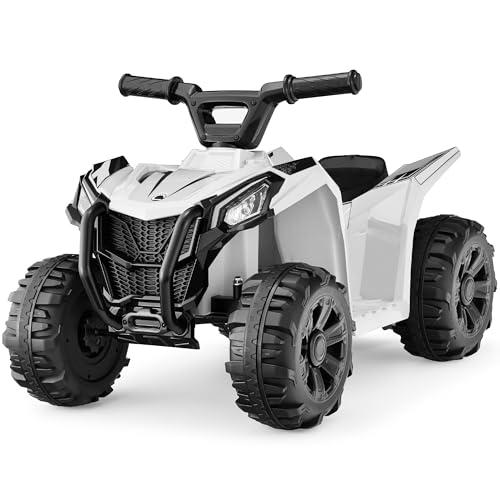 Best Choice Products 6V Kids Electric Ride-On ATV Best 6V example | 1.5-3 years, longest 6V run time | 8.2out of 10 | $89.98Amazon #ad disclosure |
| 2 | 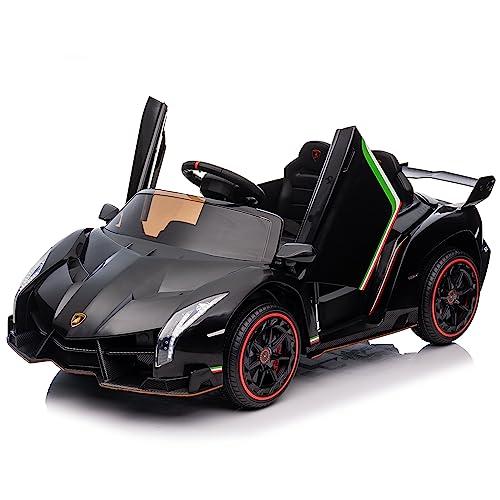 Winado 12V Lamborghini Veneno Best 12V example | 3-6 years, complete spec sheet | 8.6out of 10 | $149.99Amazon #ad disclosure |
| 3 | 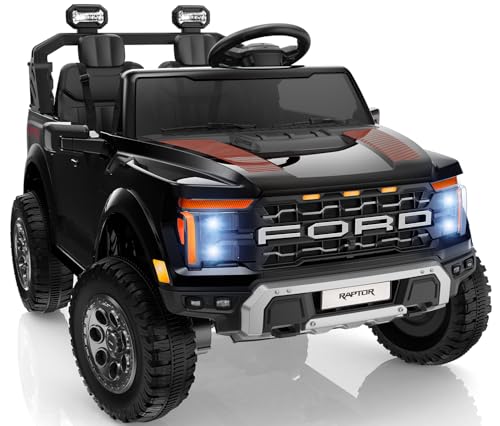 First Ride On 24V Ford F-150 Raptor 2-Seater Best 24V example | 3-8 years, completeness benchmark | 9.2out of 10 | $349.99Amazon #ad disclosure |
| 4 | 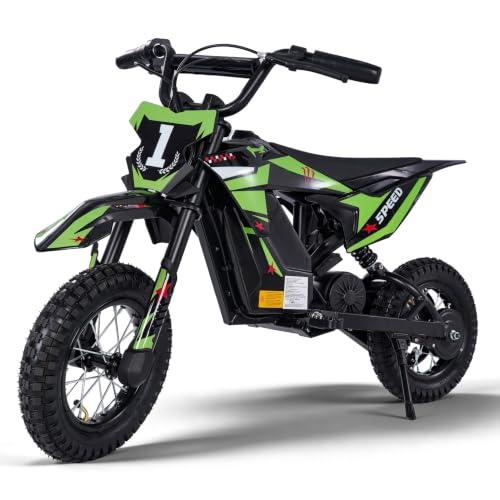 Firstness 36V Electric Dirt Bike Best 36V example | 5-10 years, complete spec sheet | 8.8out of 10 | $289.99Amazon #ad disclosure |
Scores are our own editorial ratings against the published rubric on how we pick. They are not customer ratings and they are not Amazon’s.
Every ride-on listing leads with its voltage, and almost none of them explain what the number buys you. It is worth understanding properly, because voltage is the one specification that constrains four others at once: how fast the vehicle can go, how much rider weight it can move, whether it can climb anything, and how much battery it needs to carry.
The short version: voltage is the electrical pressure available to the motors. More pressure means more torque, and torque is what gets a loaded vehicle moving from a standstill, up a slope, and through grass that is grabbing at the tires. Speed is the visible consequence; torque is the useful one.
The reference
What each voltage class actually does
Ranges are the span of published figures across the models in our registry, not a manufacturer specification.
| Voltage | Typical age | Typical speed | Typical weight limit | What it handles |
|---|---|---|---|---|
| 6V | 18 months – 3 years | 0.9 – 2 mph | 44 – 66 lb | Flat, hard ground. Pavement, driveways, indoors. |
| 12V | 3 – 6 years | 2.5 – 5 mph | 55 – 130 lb | Short cut grass, light slopes, packed dirt. |
| 24V | 3 – 8 years | 4 – 6 mph | 110 – 220 lb | Long grass, real slopes, two riders, gravel. |
| 36V | 6 – 13 years | 5 – 17 mph | 132 – 176 lb | Dirt bikes and large UTVs. Protective gear required. |
Ranges are the span of published figures across the models in our registry, not a manufacturer specification. Always read the actual listing for the model you are buying — we print each one in full on its page.
Two things in that table surprise most first-time buyers. The first is how slow 6V genuinely is — under 2 mph is slower than an adult walking pace, which is exactly right for an eighteen-month-old and disappointing for a four-year-old. The second is how much the weight limit climbs: the jump from 12V to 24V typically doubles it, and that is usually the real reason to move up, not the extra mile per hour.
6 volts
6V: the first ride, and a short one
A 6V vehicle has one small motor, usually 15W to 30W, and a battery in the 4Ah to 9.5Ah range. That combination produces a top speed between about 0.9 and 2 mph and a weight limit that is almost always 44 lb, occasionally 66 lb.
What that means in practice is that 6V works on hard, flat ground and nowhere else. On a driveway or a sidewalk it is fine. On short cut grass it will move but slowly, and the first time a wheel meets a thick patch it will stop. On any slope worth the name it will not climb. None of that is a defect — a two-year-old does not need to climb anything — but it is the reason a 6V vehicle bought for a four-year-old gets abandoned in a month.
The 44 lb limit is the figure to watch, because it is reached earlier than people expect. A US child at the 90th percentile for weight hits 44 lb at around four years old, and the 50th percentile reaches it by about five. If you are buying for a two-year-old, you have roughly two years of use. If you are buying for a three-year-old who is tall for their age, check their actual weight before you order.
Our 6V picks sit on the best 6V ride-on toys roundup, and the youngest-child options are on ride-on toys for 1-year-olds and ride-on toys for 2-year-olds.
12 volts
12V: the mainstream choice
12V is where most of the market sits, and where the quality spread is widest. Two motors of 25W to 35W each are typical, driving a 4.5Ah or 7Ah battery, producing 2.5 to 5 mph and a weight limit usually between 55 and 77 lb. A handful of 12V vehicles — the genuine Power Wheels and the Peg Perego Gator among them — reach 130 lb, because the frame and gearboxes are built to a different standard.
The amp-hour figure matters more than the voltage at this level. A 12V 4.5Ah vehicle and a 12V 7Ah vehicle can look identical on the shelf and differ by 50% in run time. The 7Ah pack is the one worth paying for, and some sellers now call it out explicitly for exactly that reason. Roughly a third of 12V listings publish the capacity at all; the rest leave the row blank, which is why we print it as not stated by maker rather than filling it in.
12V also handles short grass properly, which is the practical dividing line for most families. A 12V vehicle with two 25W motors will cross a mown lawn at a walking pace. It will struggle in long grass and it will slow noticeably on a gentle slope, but it will not simply stop the way 6V does.
The main 12V roundup is best 12V ride-on cars, and the head-to-head against the next class up is 12V vs 24V ride-on toys.
24 volts
24V: two seats, real slopes
24V changes the arithmetic. Four motors of 90W to 200W each are common — the “800W” figure on many listings is four 200W units added together — and the weight limits jump to 110 lb at the bottom and 220 lb at the top. That is the class where a two-seat vehicle stops being a two-seat body with a one-child weight limit and starts genuinely carrying two children.
This is the most important distinction on the whole site, so it is worth stating plainly: a two-seat body and a two-child weight limit are different specifications. We have 12V vehicles in our registry with two seats and a 66 lb total limit. Two average five-year-olds weigh about 90 lb between them. The body has two seats; the vehicle cannot carry two children. Read the weight limit, not the seat count — there is a longer treatment of this on ride-on toy weight limits.
Speed at 24V is typically 4 to 6 mph, which is a jogging pace. At that speed a parent cannot simply walk over and stop the vehicle, which is why the remote matters more at 24V than at 12V even though the children using it are older. Most 24V vehicles ship with one; the exceptions are deliberate, and the listings that make it a design choice say so.
See best 24V ride-on toys for the roundup, and 2-seater ride-on cars for the two-rider options specifically.
36 volts
36V: a different kind of vehicle
At 36V you are no longer buying a toy that looks like a vehicle. You are buying a small electric motorcycle or a large UTV. Top speeds in our registry run from 5 mph in the lowest mode to 17.4 mph flat out, and the weight limits reach 176 lb.
Everything about the safety calculation changes here. 15 mph on a dirt bike is fast enough to break a collarbone on a fall, and the better 36V bikes acknowledge this by shipping with three named speed modes and, in one case, a physical key that limits the top speed. Use them. A helmet is not optional at this voltage, and nor are gloves and knee pads.
The common error
Why run time has almost nothing to do with voltage
Parents reasonably assume a 24V vehicle runs twice as long as a 12V one. It does not. Run time is governed by capacity in amp-hours against the current the motors draw, and a 24V vehicle with four 200W motors draws far more current than a 12V vehicle with two 25W motors. A 24V 7Ah vehicle and a 12V 7Ah vehicle will often give similar run times, and the 24V one may give less.
What actually extends run time is a bigger battery. Our registry includes 12V packs at 7Ah, 10Ah, 12Ah and 15Ah, and the step from 7Ah to 12Ah is roughly 70% more run time for the same vehicle. That is the single cheapest upgrade available, and it is covered on ride-on battery upgrades.
The charging side is where the disclosure gets worst. A typical sealed lead-acid ride-on battery needs 8 to 12 hours to charge for 45 to 90 minutes of play — a ratio of roughly ten to one. Fewer than a quarter of the listings we checked publish a charge time at all. There is a full treatment on run time and charging.
Choosing
How to pick a voltage in four questions
- What does your child weigh right now? Not their age. Find a vehicle whose published weight limit is comfortably above that figure — the age and size chart gives the band to shop in.
- What will it drive on? Hard flat ground is 6V territory. Mown grass needs 12V. Long grass, gravel or any real slope needs 24V. There is a terrain-by-terrain breakdown on the terrain guide.
- Do you need a remote? Under four, yes. Four to six, probably. Over six, rarely. See how the parent remote works.
- One child or two? If two, check the weight limit against both children added together, and treat the seat count as styling until the limit confirms it.
Answer those four and the voltage picks itself. Answer only the last one and you will end up with a 24V two-seater for a two-year-old, which is the most expensive version of the wrong decision.
Every pick in full
The picks, in detail
Each entry below carries the same nine specifications, taken from that model’s own current listing. Rows reading not stated by maker are specs the manufacturer does not publish — we show the gap rather than filling it in.
#1 · Best 6V example
8.2 / 10
Best Choice Products 6V Kids Electric Ride-On ATV
Best Choice Products
The most complete 6V spec sheet in this price band: speed, run time and capacity are all published, which is rarer than it should be.
Published at 1.8 mph with a 44 lb limit and a 1-2 hour run time — a textbook 6V vehicle, and one of the few that publishes all three.
The nine specs
Source: the manufacturer's own published specifications on the current Amazon listing.
Our scoring
- Spec disclosure8.5
- Speed8.0
- Weight limit7.5
- Run time9.0
What works
- 1-2 hr run time is the longest published figure at 6V
- Removable battery, so you can charge it off the vehicle
- 4-wheel suspension and treaded tires for grass and dirt
- One-button control a toddler can actually work
What doesn’t
- No parent remote
- Amp-hour capacity is not published, so run time can't be sanity-checked
- 1.8 mph is quick for the youngest end of the stated range
#2 · Best 12V example
8.6 / 10
Winado 12V Lamborghini Veneno
Winado
#ad · Price as of November 8, 2026 · how this is funded
Eight of the nine specs are published, including the charge-to-run ratio most brands won't print: 8-12 hours in, 1-2 hours out.
4.3 mph, 66 lb and both a run time and a charge time in writing. At 12V that level of disclosure is unusual.
The nine specs
Source: the manufacturer's own published specifications on the current Amazon listing.
Our scoring
- Spec disclosure9.0
- Speed8.5
- Weight limit8.0
- Run time8.5
What works
- Both run time and charge time published — rare at any price
- Hydraulic doors that actually swing up
- Remote gives 3 speeds, manual gives 2
- 4.3 mph is the quickest 12V single-seater here
What doesn’t
- 4.3 mph is fast for the bottom of the stated 3-6 range
- Amp-hour capacity is not published
- 8-12 hr charge is a full overnight
#3 · Best 24V example
9.2 / 10
First Ride On 24V Ford F-150 Raptor 2-Seater
First Ride On
Eight of nine specs, including a 3.5-5.0 mph band, a 132 lb limit, a 20-inch seat and a 98-foot remote — the completeness benchmark.
Eight of nine specs published: a 3.5-5.0 mph band, 132 lb, a 20-inch seat and a remote range in feet. The completeness benchmark for the whole site.
The nine specs
Source: the manufacturer's own published specifications on the current Amazon listing.
Our scoring
- Spec disclosure9.5
- Speed9.0
- Weight limit9.0
- Run time9.0
What works
- Eight of nine specs published — the most complete sheet in the registry
- Speed as a band, remote range in feet, seat width in inches
- 132 lb limit with a stated 3-8 year range
- Officially licensed Ford F-150 Raptor
What doesn’t
- Charge time is the single missing spec
- 5 mph top end needs the remote for a three-year-old
- Among the most expensive here
#4 · Best 36V example
8.8 / 10
Firstness 36V Electric Dirt Bike
Firstness
#ad · Price as of November 8, 2026 · how this is funded
All three speed modes, the 5.2Ah capacity, a 133 lb limit and a 5-6 hour charge — the most complete dirt-bike sheet here.
All three speed modes named as numbers, plus capacity, weight limit and charge time. 36V is where speed stops being a novelty, so disclosure matters most.
The nine specs
Source: the manufacturer's own published specifications on the current Amazon listing.
Our scoring
- Spec disclosure9.0
- Speed8.0
- Weight limit9.0
- Run time8.5
What works
- Eight of nine specs published, including all three speed modes
- Hydraulic suspension
- 133 lb limit with a stated 5-10 year range
- 250W motor with a ~90 min run time
What doesn’t
- 15.5 mph top mode is fast for a five-year-old — lock it down
- No parent remote
- 5.2Ah is a third of the XERATH's capacity
Questions parents ask
Frequently asked questions
Is a 24V ride-on twice as fast as a 12V one?
Can a 12V ride-on go on grass?
What does 800W mean on a 24V ride-on?
Does a higher voltage mean a longer run time?
Can I put a 24V battery in a 12V ride-on to make it faster?
Which voltage is best for a 3-year-old?
Where these numbers come from
Sources
- ASTM F963 — Standard Consumer Safety Specification for Toy Safety
- US Consumer Product Safety Commission — recalls and safety news
- CDC Clinical Growth Charts (weight-for-age percentiles)
Product specifications on this page are taken from each manufacturer’s own published listing. Where a manufacturer does not publish a figure, the row reads “not stated by maker” rather than carrying an estimate.
Read next