Terrain reference
Which ride-on works in your yard
The most common post-purchase disappointment is a vehicle that will not move on grass. Voltage, motor count and tire material decide it, and all three are usually published.
Written by
Mike M. · owner, Iron Mako Media
Published October 30, 2026 · last updated November 2, 2026 · specs checked against each maker’s current listing
Price checked November 8, 2026
Verdict first
Quick picks
The most common post-purchase disappointment is a vehicle that will not move on grass. Voltage, motor count and tire material decide it, and all three are usually published.. Tap any row to jump to that model’s full write-up below, or go straight to Amazon from the price column. Prices last checked November 8, 2026.
| # | Product | Best for | Score | Price |
|---|---|---|---|---|
| 1 | 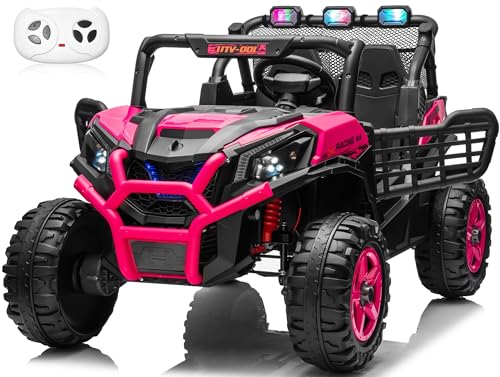 JOYRACER 24V 4x4 Off-Road UTV 2-Seater Best on rough ground | 3-8 years, off-road UTV | 9.0out of 10 | $299.99Amazon #ad disclosure |
| 2 | 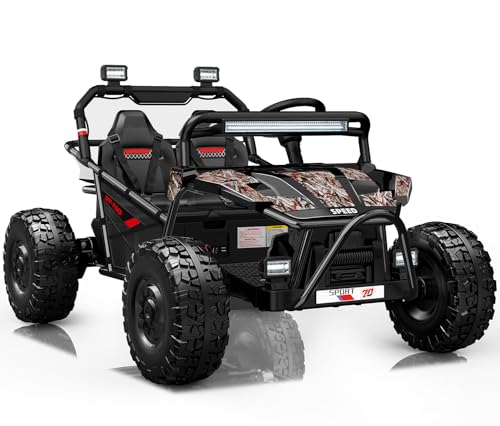 First Ride On 36V 2-Seater Kids UTV Best on slopes | Age 6+, true driving UTV | 8.7out of 10 | $469.99Amazon #ad disclosure |
| 3 | 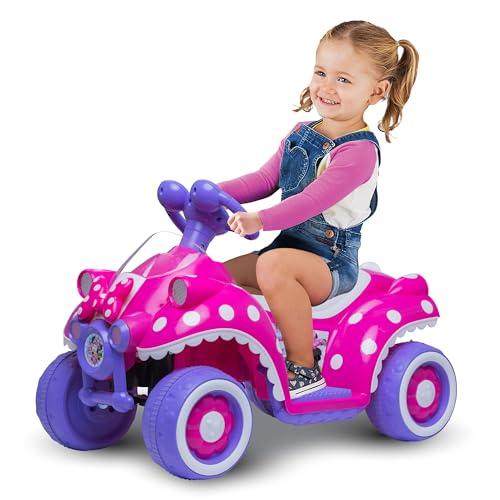 Kid Trax Disney Minnie Mouse 6V Quad Best 6V on grass | 18-30 months, grass traction | 7.9out of 10 | $119.99Amazon #ad disclosure |
| 4 | 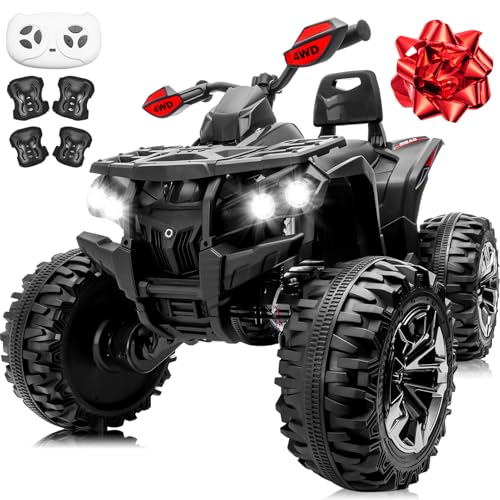 MOEYURO 24V 4x4 Kids ATV Four Wheeler Biggest battery for grass | Big kids, largest 24V battery | 8.6out of 10 | $309.99Amazon #ad disclosure |
Scores are our own editorial ratings against the published rubric on how we pick. They are not customer ratings and they are not Amazon’s.
“It will not move on the grass” is the most common complaint about ride-on toys, and it is almost always predictable from the specifications before you buy. Three of them decide it, and most listings publish all three.
The three specs
What decides whether it moves
Voltage, for torque. Grass resists. Getting a loaded vehicle moving from a standstill through resistance needs torque, and torque scales with voltage. 6V has barely enough to move on a hard floor with a child aboard; 12V handles a mown lawn; 24V handles grass that has not been cut this week.
Motor count, for traction. This is the one people miss. A two-motor rear-drive vehicle on grass will spin whichever wheel has least grip and go nowhere, exactly like a two-wheel-drive car in snow. Four motors — one per wheel, which is what “4WD” and the “800W” headline figure mean on these vehicles — put power down through all four contact patches. On grass, four small motors beat two large ones.
Tire material, for grip. Hard polypropylene wheels have essentially no grip on grass; they skate. The upgrades, in order: molded rubber traction strips inset into the plastic (a real improvement, and what Kid Trax fits), then full EVA foam tires, then pneumatic rubber on dirt bikes. EVA is the sweet spot on four-wheeled vehicles — grippy, quiet, and it cannot puncture.
By surface
What works where
| Surface | Minimum voltage | Motors | Tires | Speed penalty |
|---|---|---|---|---|
| Indoor hard floor | 6V | Any | Any (EVA for noise) | None |
| Pavement, driveway | 6V | Any | Any | None |
| Short cut grass | 12V | 2 minimum | Traction strips or EVA | ~1/3 |
| Long or wet grass | 24V | 4 (true 4WD) | EVA | ~1/2 |
| Packed dirt, bark chip | 12V | 2 minimum | EVA | ~1/3 |
| Loose gravel | 24V | 4 (true 4WD) | EVA, large diameter | ~1/2 |
| Any real slope | 24V | 4 (true 4WD) | EVA | See the safety note |
The run-time cost
Grass costs battery, not just speed
A vehicle rated for an hour on pavement will manage perhaps thirty-five to forty minutes on grass, because the motors are drawing substantially more current to overcome the resistance. That compounds with rider weight: a heavy child on long grass can halve the published run time.
Which means for a grass yard you want the biggest battery you can get as well as the right voltage and motor count. Our registry includes 24V packs at 7Ah, 9Ah, 10Ah and 12Ah, and the step up is worth it here in a way it is not for a driveway vehicle. See run time and charging and battery upgrades.
Retrofitting
Improving a vehicle you already own
If you already have a vehicle that struggles, two changes genuinely help and one does not.
Tires help most. Fitting rubber or EVA tires, or adding traction bands over existing plastic wheels, is the cheapest meaningful change and transforms grip on grass. See rubber tire upgrades and the comparison on rubber vs plastic tires.
A bigger battery helps the run time but not the traction. Still worth doing for a grass yard.
Faster motors do not help. Higher-RPM motors trade torque for speed, which is exactly the wrong trade on grass — the vehicle will be no better at getting moving and will drain the battery faster. If a vehicle cannot cross your lawn, it needs grip and torque, not RPM. The honest version is on motor upgrades.
The vehicles selected specifically for grass are on best ride-on toys for grass, and the ones with rubber or EVA tires as standard are on ride-on toys with rubber tires.
Every pick in full
The picks, in detail
Each entry below carries the same nine specifications, taken from that model’s own current listing. Rows reading not stated by maker are specs the manufacturer does not publish — we show the gap rather than filling it in.
#1 · Best on rough ground
9.0 / 10
JOYRACER 24V 4x4 Off-Road UTV 2-Seater
JOYRACER
#ad · Price as of November 8, 2026 · how this is funded
All four specs that matter off-road are published: 5 mph, 130 lb, a 20-inch seat and a 3-8 year range.
True 4WD with four 200W motors and EVA tires on a 130 lb limit. This is the specification combination that actually crosses long grass with two children aboard.
The nine specs
Source: the manufacturer's own published specifications on the current Amazon listing.
Our scoring
- Traction9.5
- Power9.5
- Spec disclosure9.0
- Value8.5
What works
- Eight of nine specs published
- 4WD with 4 x 200W motors — real grass capability
- 130 lb limit and a 20-inch seat
- 5 mph with a 3-8 year range stated together
What doesn’t
- Charge time not published
- 5 mph on a UTV needs the remote for younger riders
- Side-by-side body is wide; check gate widths
#2 · Best on slopes
8.7 / 10
First Ride On 36V 2-Seater Kids UTV
First Ride On
#ad · Price as of November 8, 2026 · how this is funded
36V, 14-inch EVA wheels, a metal chassis and a deliberate no-remote design — a true driving UTV for a six-year-old and up.
36V, 14-inch EVA tires, a metal chassis and rear spring suspension. The listing names grass, dirt and gravel specifically, and the hardware backs it up.
The nine specs
Source: the manufacturer's own published specifications on the current Amazon listing.
Our scoring
- Traction9.5
- Power9.5
- Spec disclosure9.0
- Value7.5
What works
- 14-inch EVA tires, reinforced metal chassis and rear spring suspension
- 36V 9Ah with 2 x 200W motors
- Variable throttle and electronic brake — real vehicle control
- 3-point belt on each of two seats
What doesn’t
- No remote at all — the listing is explicit that this is intentional
- 8 mph on grass with no parent override demands an enclosed space
- 40-60 min run time
#3 · Best 6V on grass
7.9 / 10
Kid Trax Disney Minnie Mouse 6V Quad
Kid Trax
#ad · Price as of November 8, 2026 · how this is funded
Licensed Disney with rubber traction strips on the tires, which is the detail that decides whether a 6V quad moves on grass at all.
Rubber traction strips rather than bare plastic. At 6V that detail is the difference between moving on a lawn and not — though it is still only a lawn, not long grass.
The nine specs
Source: the manufacturer's own published specifications on the current Amazon listing.
Our scoring
- Traction8.5
- Power5.5
- Spec disclosure6.5
- Value8.5
What works
- Power Trax rubber traction strips, not bare plastic
- Push-button acceleration sized for small hands
- 1-year limited warranty, 6 months on the battery
- Direct-connect one-step charging
What doesn’t
- No run time or charge time published
- Narrowest age window here at 18-30 months
- Forward 1.5 mph only
#4 · Biggest battery for grass
8.6 / 10
MOEYURO 24V 4x4 Kids ATV Four Wheeler
MOEYURO
#ad · Price as of November 8, 2026 · how this is funded
A 9Ah pack — the largest lead-acid capacity in the registry — on a 4x4 quad with a published 1.8-5 mph band.
A 9Ah pack and four 200W motors. Grass costs run time as well as speed, so the largest capacity in the registry is the right answer for a rough yard.
The nine specs
Source: the manufacturer's own published specifications on the current Amazon listing.
Our scoring
- Traction9.0
- Power9.0
- Spec disclosure9.5
- Value8.0
What works
- 9Ah capacity, the largest here — the spec that drives run time
- All nine specs except age range are published
- 4 x 200W motors, true 4x4
- Charge time published at 8-12 hr
What doesn’t
- No stated age range on a 5 mph quad
- A quad has no seat belt by design
- 110 lb over two seats is less than the two-seat cars manage
Questions parents ask
Frequently asked questions
Will a 6V ride-on work on grass?
What ride-on toy is best for a grass yard?
Can ride-on cars go up hills?
Do rubber tires make a big difference on a ride-on?
Why does my ride-on car get slower on grass?
Where these numbers come from
Sources
- CPSC safety guides and education materials
- ASTM F963 — Standard Consumer Safety Specification for Toy Safety
Product specifications on this page are taken from each manufacturer’s own published listing. Where a manufacturer does not publish a figure, the row reads “not stated by maker” rather than carrying an estimate.
Read next