Speed reference
How fast do ride-on toys go?
Published top speeds across 126 current models, by voltage class — and the speed that actually suits each age, which is usually lower than the one on the box.
Written by
Mike M. · owner, Iron Mako Media
Published October 18, 2026 · last updated November 8, 2026 · specs checked against each maker’s current listing
Price checked November 8, 2026
Verdict first
Quick picks
Published top speeds across 126 current models, by voltage class — and the speed that actually suits each age, which is usually lower than the one on the box.. Tap any row to jump to that model’s full write-up below, or go straight to Amazon from the price column. Prices last checked November 8, 2026.
| # | Product | Best for | Score | Price |
|---|---|---|---|---|
| 1 | 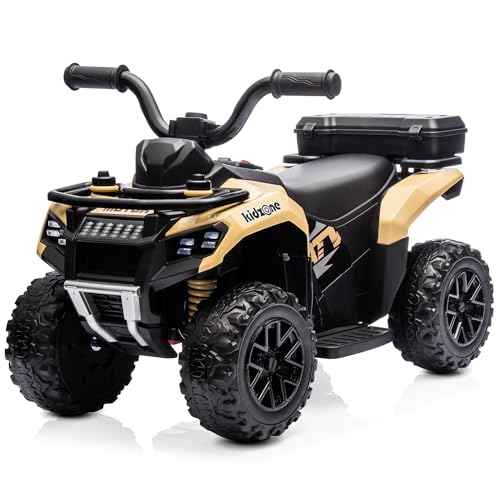 Kidzone 6V Ride-On ATV Quad Slowest published | 18-36 months, first ride | 8.2out of 10 | $79.96Amazon #ad disclosure |
| 2 |  Maybird 12V Dodge Durango Pursuit Police Car Best speed disclosure | Age 3+, graduated speed control | 8.7out of 10 | $164.99Amazon #ad disclosure |
| 3 | 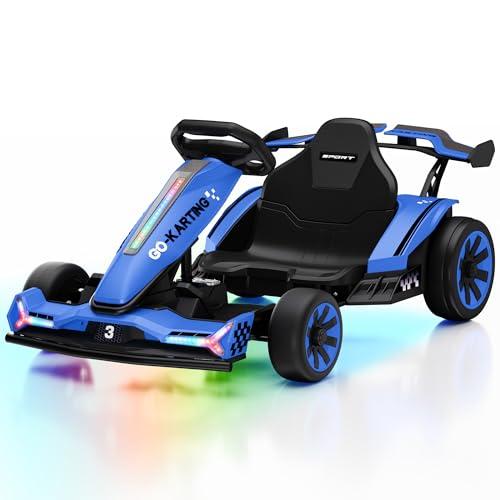 Firstness 24V 10Ah Drift Go-Kart Fastest four wheels | Age 6+, fastest 24V | 8.4out of 10 | $269.99Amazon #ad disclosure |
| 4 | 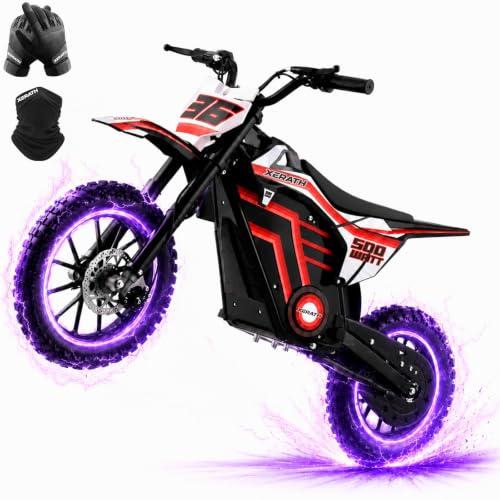 XERATH 36V 500W Electric Dirt Bike Fastest overall | 6-13 years, longest range | 8.6out of 10 | $459.99Amazon #ad disclosure |
Scores are our own editorial ratings against the published rubric on how we pick. They are not customer ratings and they are not Amazon’s.
Speed is the specification children care about and the one parents most often misjudge, in both directions. A 6V quad at 1.2 mph genuinely is slower than you are expecting. A 36V dirt bike at 17 mph is genuinely faster than you are expecting. And between them sit the 12V and 24V vehicles where most purchases happen, and where a single mile per hour changes whether you can walk alongside.
Here is the one number to hold on to: comfortable adult walking pace is about 3 mph. Below that, you can keep up with a vehicle on foot and reach it to stop it. Above that, you cannot. Nearly every meaningful safety decision about ride-on speed sits on that threshold.
The data
Published top speeds by voltage
Every figure below is from a current manufacturer listing in our registry. Where a maker publishes a band rather than a single number, we use the band.
| Class | Slowest | Typical | Fastest | Versus walking pace |
|---|---|---|---|---|
| 6V | 0.93 mph | 1.5 mph | 2 mph | Well below. You can walk beside it easily. |
| 12V | 1.2 mph | 2.5-3.1 mph | 5 mph | At or just above. Depends on the setting. |
| 24V | 1.2 mph | 4.3-5 mph | 7.5 mph | Above. You would have to jog. |
| 36V | 5 mph | 7.5-15.5 mph | 17.4 mph | Far above. Running will not catch it. |
Notice that 12V and 24V both bottom out near 1.2 mph. That is not a mistake — it is the lowest setting on their speed ladder, and it is the single most useful fact in this guide. A 24V vehicle with a 1.2 mph low setting is safe for a three-year-old in a way its 5 mph top speed is not. The vehicle is as fast or as slow as the setting you leave it on.
Speed settings
How speed settings and locks actually work
There are four mechanisms in common use, and they differ a lot in how reliably a child can defeat them:
- A high/low switch on the dashboard. The weakest option. A four-year-old will find it. Some vehicles hide it under the seat or behind the pedal, which helps.
- A screw-in speed limiter. A physical screw under the pedal that stops it traveling to the full position. Common on Power Wheels. A child cannot defeat it without a screwdriver, which makes it the most reliable mechanical option.
- Remote speed selection. The parent remote sets the speed, usually across three steps, and on most vehicles remote mode overrides the pedal entirely. Best of both — but only while you are holding the remote.
- A removable speed key. Found on some 36V dirt bikes. The bike will not exceed the lower mode without the key fitted. If you are buying a bike for a younger child, this is the feature to look for.
What almost no vehicle has is a speed limit you can set once and forget. Treat the setting as something you check at the start of every session, like a bike helmet. More on the remote specifically at how the parent remote works.
Matching
What speed suits which age
| Age | Speed to aim for | Why |
|---|---|---|
| 1-2 years | Under 1.5 mph | They cannot steer away from an obstacle. You need to be able to reach them instantly. |
| 3-4 years | 2-3 mph | Steering is reliable, judgment is not. Keep it at or below walking pace. |
| 5-6 years | 3-4 mph | They can stop on request. A faster setting is reasonable in an enclosed space. |
| 7-8 years | 4-6 mph | The usual 24V band. Fast enough to hold interest, slow enough to be recoverable. |
| 9+ years | 6 mph+ with gear | Dirt-bike territory. Helmet, gloves and pads, and a surface without traffic. |
Reality check
Why your vehicle is slower than the box says
Published top speeds are measured in the most favorable conditions available: a light rider, a flat hard surface, and a fully charged battery. Three things reduce them in your yard.
Rider weight. A vehicle near its weight limit will not reach its published speed. This is the largest single factor and it compounds with everything else.
Surface. Grass costs roughly a third of the top speed on a 12V vehicle and less on 24V. Gravel costs more. A slope can cost all of it — see the terrain guide.
Battery state. A sealed lead-acid battery’s voltage sags as it discharges, and speed sags with it. The last ten minutes of a session are noticeably slower than the first ten, and a battery that is two years old will never reach the original speed at all. That is a battery problem, not a motor problem — see battery replacement.
Every pick in full
The picks, in detail
Each entry below carries the same nine specifications, taken from that model’s own current listing. Rows reading not stated by maker are specs the manufacturer does not publish — we show the gap rather than filling it in.
#1 · Slowest published
8.2 / 10
Kidzone 6V Ride-On ATV Quad
Kidzone
A genuinely slow 6V quad for 18-36 months, and the listing publishes the speed band and weight limit most toddler ride-ons bury.
0.93-1.24 mph, published as a band rather than a single figure. Slower than an adult walking pace, which is exactly right for eighteen months.
The nine specs
Source: the manufacturer's own published specifications on the current Amazon listing.
Our scoring
- Speed suitability9.5
- Spec disclosure8.0
- Safety9.0
- Value8.0
What works
- Speed tops out at 1.24 mph — slow enough to walk alongside
- Published 44 lb limit, which is honest for the size
- Rear storage box plus Bluetooth and USB for music
- Compact 27.2 x 15.8 x 17.1 in, so it stores indoors
What doesn’t
- No parent remote — the child has full control
- Battery capacity is not published
- 44 lb is outgrown fast; many three-year-olds are already close
#2 · Best speed disclosure
8.7 / 10
Maybird 12V Dodge Durango Pursuit Police Car
Maybird
The clearest speed disclosure of any 12V car here: three named remote speeds (1.9, 2.5 and 3.1 mph) rather than a vague 3-speed claim.
Three remote speed steps named individually — 1.9, 2.5 and 3.1 mph. No other listing in the registry publishes its speed ladder step by step.
The nine specs
Source: the manufacturer's own published specifications on the current Amazon listing.
Our scoring
- Speed suitability8.5
- Spec disclosure10.0
- Safety8.5
- Value8.0
What works
- Every remote speed step is published as a number
- Remote has a high-priority emergency brake
- Run time stated with the speed it applies to — almost nobody does this
- 80% pre-assembled; stated 20-minute build
What doesn’t
- Charge time is not published
- No amp-hour figure
- The 90-minute figure is the low-speed run time, not the 3.1 mph one
#3 · Fastest four wheels
8.4 / 10
Firstness 24V 10Ah Drift Go-Kart
Firstness
7.5 mph and a four-position adjustable seat: the fastest 24V vehicle here, and it says age 6+ rather than pretending otherwise.
7.5 mph with a stated age-6 floor and a four-position seat. The speed and the age range are published together, which is the honest way to sell a fast vehicle.
The nine specs
Source: the manufacturer's own published specifications on the current Amazon listing.
Our scoring
- Speed suitability7.5
- Spec disclosure8.5
- Safety7.5
- Value8.5
What works
- 10Ah pack with a stated ~60 min run time
- Seat adjusts through four positions as the child grows
- Age 6+ stated, matching the 7.5 mph speed
- 400W drive
What doesn’t
- No parent remote on the fastest vehicle in the registry
- 7.5 mph needs a helmet and a flat, enclosed surface
- Go-kart body is low — poor on grass
#4 · Fastest overall
8.6 / 10
XERATH 36V 500W Electric Dirt Bike
XERATH
A 15Ah battery and a 165 lb limit with a parent-controlled speed key — the longest-range bike here, at 17.4 mph.
17.4 mph, with a parent-controlled speed key to limit it. At this speed the key is not a feature, it is the reason the bike is sellable to a six-year-old's parent.
The nine specs
Source: the manufacturer's own published specifications on the current Amazon listing.
Our scoring
- Speed suitability7.5
- Spec disclosure7.5
- Safety8.5
- Value8.0
What works
- 15Ah battery with a stated 23.6-mile range
- 165 lb limit — the highest of any vehicle here
- Parent-controlled speed key limits the top speed
- Honest 6-13 year range
What doesn’t
- 17.4 mph is the fastest in the registry; full protective gear required
- No run time or charge time published
- Most expensive product in the registry
Questions parents ask
Frequently asked questions
How fast does a 12V ride-on car go?
How fast is a 24V ride-on toy?
Is 5 mph too fast for a 3-year-old?
Can you make a ride-on toy faster?
Why is my ride-on slower than advertised?
What is the fastest kids ride-on toy?
Where these numbers come from
Sources
- CPSC safety guides and education materials
- ASTM F963 — Standard Consumer Safety Specification for Toy Safety
- NHTSA — bicycle and helmet safety guidance
Product specifications on this page are taken from each manufacturer’s own published listing. Where a manufacturer does not publish a figure, the row reads “not stated by maker” rather than carrying an estimate.
Read next