1 vs 2 seats
1-seater vs 2-seater ride-on cars
The decision most often made on the wrong information, because a two-seat body and a two-child weight limit are different specifications.
Written by
Mike M. · owner, Iron Mako Media
Published October 24, 2026 · last updated November 8, 2026 · specs checked against each maker’s current listing
How this page is funded: we earn a commission when you buy through our Amazon links, at no extra cost to you. It does not change which products we pick or what we say about them — the scoring rubric is published and applied the same way to every product. Full disclosure.
Price checked November 8, 2026
Verdict first
Quick picks
The decision most often made on the wrong information, because a two-seat body and a two-child weight limit are different specifications.. Tap any row to jump to that model’s full write-up below, or go straight to Amazon from the price column. Prices last checked November 8, 2026.
| # | Product | Best for | Score | Price |
|---|---|---|---|---|
| 1 | 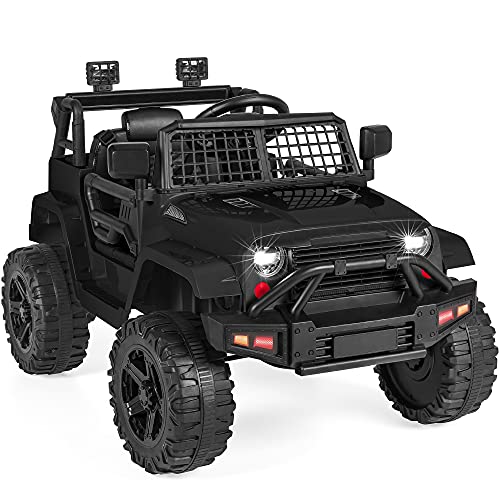 Best Choice Products 12V Kids Ride-On Car Best 1-seater | Age 3+, first 12V with a remote | 8.5out of 10 | $189.99Amazon #ad disclosure |
| 2 | 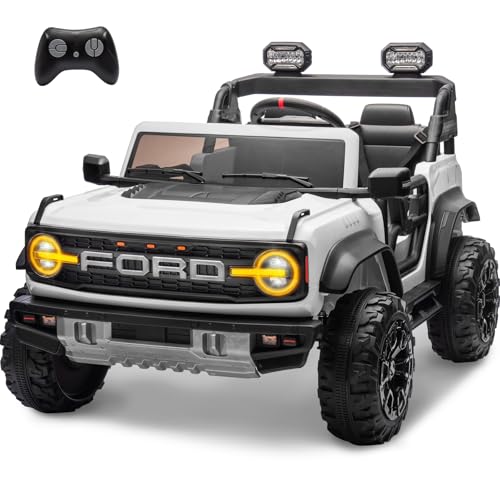 Seizeen 24V Ford Bronco Raptor 2-Seater Best 2-seater | 3-8 years, best-documented 24V | 9.3out of 10 | $349.90Amazon #ad disclosure |
| 3 | 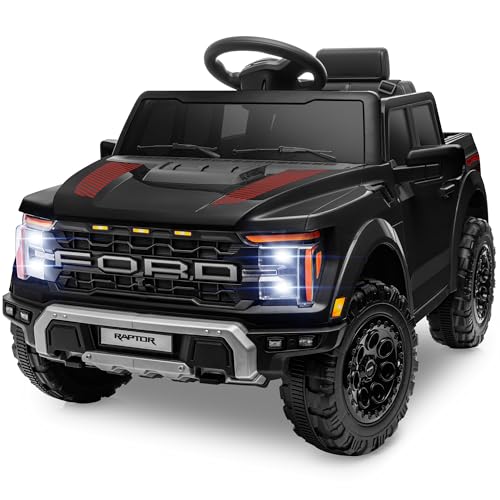 Seizeen 12V Ford F-150 Raptor Best documented 1-seater | Best-documented 12V truck | 8.8out of 10 | $209.90Amazon #ad disclosure |
| 4 | 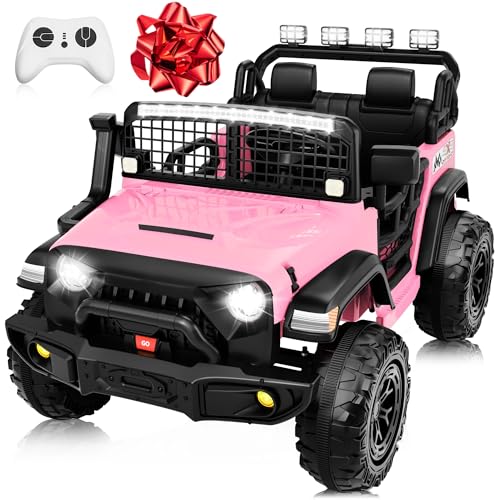 JOYRACER 24V 2-Seater Ride-On with 800W Motors Widest bench | Two riders, widest bench | 8.6out of 10 | $269.99Amazon #ad disclosure |
Scores are our own editorial ratings against the published rubric on how we pick. They are not customer ratings and they are not Amazon’s.
This decision is usually made on the seat count and should be made on the weight limit, and the gap between those two things is where most of the disappointment in this category comes from.
The arithmetic
What two seats actually requires
On every two-seat ride-on we have checked, the published weight limit is the total for both seats. Our registry contains two-seat vehicles with 66 lb limits. From the CDC growth charts:
- Two four-year-olds: about 72 lb. A 66 lb vehicle is already over.
- Two five-year-olds: about 82 lb.
- Two six-year-olds: about 92 lb.
- Two eight-year-olds: about 112 lb.
- Two ten-year-olds: about 144 lb.
So the realistic minimum for two school-age children is 110 lb, and 130 lb is comfortable. Below that, the second seat is styling. See weight limits and 2-seater ride-on cars.
Width
The constraint behind the limit
Two children can be inside the weight limit and still not fit side by side. The benches in our registry that publish a width give 19 to 22 inches, and single seats give 15. Practically: 15 inches is one child to about five, 19-20 inches is two children to about six, and 21-22 inches is two six-to-eight-year-olds.
Most listings publish nothing, and where a seller does state it in inches that is a reliable signal they publish the rest of the sheet too.
The case for two
Why a two-seater often suits one child
This is the point people miss. Two-seat vehicles come with the higher weight limits and the wider seats as a package, which means a two-seater bought for one child frequently lasts twice as long.
A 110 lb two-seater will fit a four-year-old until nine or ten. A 66 lb single-seater stops at seven. If the storage space exists, the two-seater is often the better purchase even with no second child in the picture.
The case for one
Three good reasons to stay single
- Storage and gates. A 24V two-seater approaches three feet wide and will not pass some garden gates. A compact single-seater at 39 inches long fits in a garage corner.
- Weight when flat. A two-seater with a dead battery is genuinely heavy to push, and someone has to do it.
- Price. Roughly half, which at the 12V end buys a spare battery and a charger with change.
Related: best 24V ride-on toys (where most real two-seaters live) and 12V vs 24V.
Every pick in full
The picks, in detail
Each entry below carries the same nine specifications, taken from that model’s own current listing. Rows reading not stated by maker are specs the manufacturer does not publish — we show the gap rather than filling it in.
#1 · Best 1-seater
8.5 / 10
Best Choice Products 12V Kids Ride-On Car
Best Choice Products
The default first 12V car: parent remote, 2.8 mph, and a 61 lb limit stated plainly rather than hidden in a dimensions line.
A compact 39-inch body with a 61 lb limit and a remote. For one child under five on a tight storage budget, a single-seater is the right answer.
The nine specs
Source: the manufacturer's own published specifications on the current Amazon listing.
Our scoring
- Fit for purpose9.0
- Storage9.0
- Weight limit7.0
- Value9.0
What works
- Parent remote with forward and reverse
- Lockable doors, adjustable seatbelt, spring suspension
- Non-deflating plastic wheels with traction tread
- Small footprint: 39.25 x 26 x 26 in
What doesn’t
- Neither run time nor charge time is published
- 61 lb is the lowest limit of the 12V cars here
- No amp-hour figure
#2 · Best 2-seater
9.3 / 10
Seizeen 24V Ford Bronco Raptor 2-Seater
Seizeen
132 lb, 4.4 mph and a 1-2 hour run time on a licensed Bronco — the most complete 24V sheet in the registry.
132 lb across two seats with a belt each and eight of nine specs published. This is what a genuine two-child vehicle looks like.
The nine specs
Source: the manufacturer's own published specifications on the current Amazon listing.
Our scoring
- Fit for purpose9.5
- Storage6.5
- Weight limit9.0
- Value8.5
What works
- Eight of nine specs published
- 132 lb limit is the practical two-child figure
- Officially licensed Ford Bronco Raptor
- 4 x 90W motors with a safety belt per seat
What doesn’t
- Charge time is the one spec missing
- 4.4 mph on grass will drain a 7Ah pack faster than the stated 1-2 hr
- Large footprint — measure your storage before buying
#3 · Best documented 1-seater
8.8 / 10
Seizeen 12V Ford F-150 Raptor
Seizeen
The best-documented 12V truck here: a real speed range, a real run-time range, and a seat width stated in inches.
A 15-inch seat width published in inches — the number that tells you it is comfortable at five and tight at six. Seven of nine specs as real ranges.
The nine specs
Source: the manufacturer's own published specifications on the current Amazon listing.
Our scoring
- Fit for purpose9.0
- Storage8.5
- Weight limit7.0
- Value8.5
What works
- Seven of nine specs published, with real ranges rather than round numbers
- 70-110 min run time from a 12V 7Ah pack
- 3-point seatbelt and 4-wheel suspension
- Remote has 3 speeds plus an emergency brake
What doesn’t
- No stated age range
- Charge time not published
- 2.7 mph will feel slow to a six-year-old
#4 · Widest bench
8.6 / 10
JOYRACER 24V 2-Seater Ride-On with 800W Motors
JOYRACER
#ad · Price as of November 8, 2026 · how this is funded
A 21-inch bench seat is the headline spec — the widest in the registry, and the reason two children actually fit.
A 21-inch bench on a 110 lb limit. Width is what makes two children actually fit, and almost nobody publishes it.
The nine specs
Source: the manufacturer's own published specifications on the current Amazon listing.
Our scoring
- Fit for purpose9.0
- Storage6.5
- Weight limit8.0
- Value8.5
What works
- 21-inch seat — widest here, published in inches
- 4 x 200W motors (800W total)
- 1-2 hr run time from a 7Ah pack
- 110 lb limit stated
What doesn’t
- Top speed is not published on an 800W vehicle
- No stated age range
- Charge time not published
Questions parents ask
Frequently asked questions
Is a ride-on weight limit per seat or total?
Should I buy a 2-seater for one child?
What weight limit do I need for two children?
How wide does a two-seat ride-on bench need to be?
Will a two-seater ride-on fit through a garden gate?
Where these numbers come from
Sources
- CDC Clinical Growth Charts (weight-for-age percentiles)
- ASTM F963 — Standard Consumer Safety Specification for Toy Safety
- CPSC safety guides and education materials
Product specifications on this page are taken from each manufacturer’s own published listing. Where a manufacturer does not publish a figure, the row reads “not stated by maker” rather than carrying an estimate.
Read next