Restraint reference
Seat belts and harnesses on ride-on toys
Lap strap, three-point harness, five-point harness or nothing at all. Which your vehicle has is rarely in the headline, and it changes what the belt actually does.
Written by
Mike M. · owner, Iron Mako Media
Published October 28, 2026 · last updated November 3, 2026 · specs checked against each maker’s current listing
Price checked November 8, 2026
Verdict first
Quick picks
Lap strap, three-point harness, five-point harness or nothing at all. Which your vehicle has is rarely in the headline, and it changes what the belt actually does.. Tap any row to jump to that model’s full write-up below, or go straight to Amazon from the price column. Prices last checked November 8, 2026.
| # | Product | Best for | Score | Price |
|---|---|---|---|---|
| 1 | 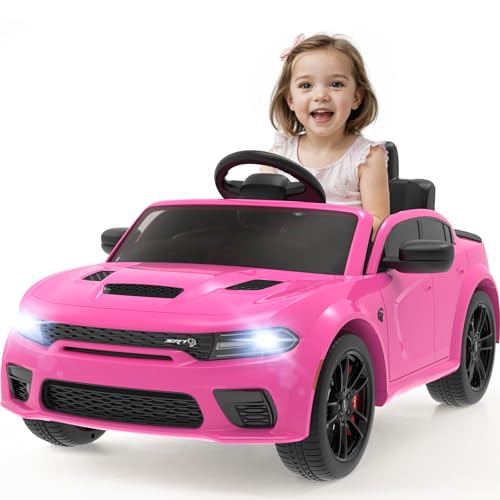 SEGMART 12V Dodge Charger SRT Hellcat Best restraint at 12V | 3-6 years, bigger battery | 8.4out of 10 | $129.99Amazon #ad disclosure |
| 2 | 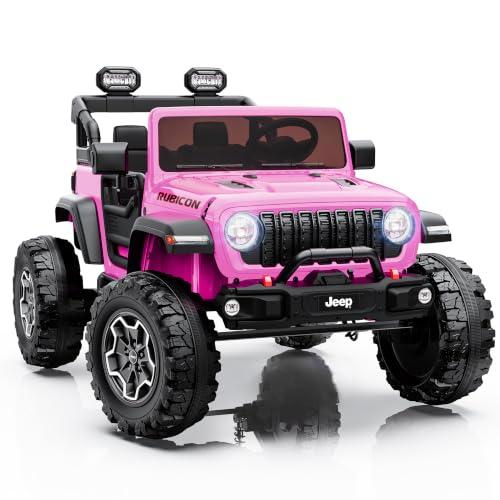 First Ride On 24V Jeep Wrangler Rubicon 2-Seater Best at 24V | Licensed 24V Jeep, two riders | 8.6out of 10 | $359.99Amazon #ad disclosure |
| 3 | 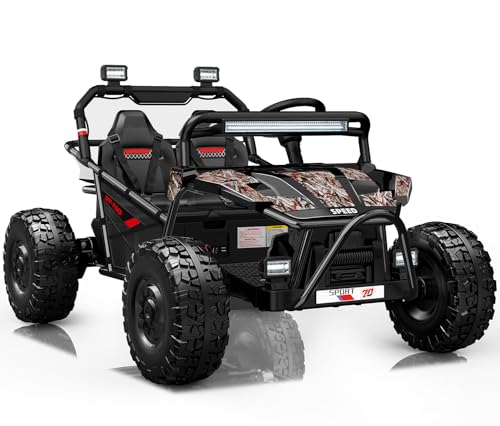 First Ride On 36V 2-Seater Kids UTV Best on a fast vehicle | Age 6+, true driving UTV | 8.5out of 10 | $469.99Amazon #ad disclosure |
| 4 | 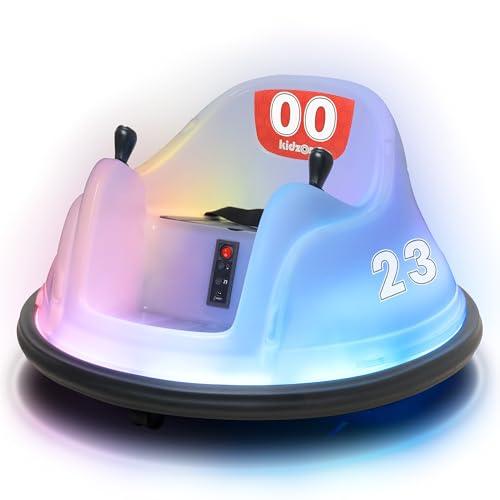 Kidzone 6V Ride-On Bumper Car Belt at 6V | Indoor play, 18-72 months | 8.0out of 10 | $179.96Amazon #ad disclosure |
Scores are our own editorial ratings against the published rubric on how we pick. They are not customer ratings and they are not Amazon’s.
“Does it have a seat belt?” is one of the most common questions about ride-on toys, and the answer is more layered than yes or no. Nearly every sit-in car has something; what it is varies a lot, and the listing usually will not tell you.
The four levels
What is actually fitted
No restraint
Quads, ATVs, motorcycles, trikes and most unpowered foot-to-floor ride-ons. This is a design decision, not an omission: you dismount a quad by stepping off it, and being strapped to one that is tipping is worse than not being. On these vehicles the speed setting is the only safeguard you have, which is why we weight it so heavily on the ATV roundup.
Lap strap
A single belt across the hips, usually a plastic side-release buckle. Common at 6V and on cheaper 12V cars. It keeps a child in the seat on a bumpy lawn and stops them standing up while moving. It does nothing for the upper body in an impact.
Three-point harness
Two shoulder straps into a central buckle at the hips, like a car belt. This is the level worth looking for on anything at 12V or above, because the impact a ride-on has is a frontal one into a fixed object, and the three-point is the first level that restrains the torso. Several listings in our registry name it explicitly as a “3-point safety belt”, and that specificity is itself a quality signal.
Five-point harness
Two shoulder straps, two hip straps and a crotch strap, all into one central buckle — the car-seat arrangement. Rare, and the one vehicle in our registry that fits one states it plainly. If a five-point is available in your price band, take it.
Reading listings
How to tell which one you are buying
The phrases, in descending order of how much they actually tell you:
- “Five-point seat belt” or “3-point safety belt” — unambiguous. Believe it.
- “Adjustable seatbelt” — almost always a lap strap. If it were a harness the seller would say so.
- “Safety belt” — unspecified, and usually a lap strap.
- “Safety features include…” with no belt named — assume there is no belt.
The product photos are more reliable than the copy. A three-point harness is visible as two straps over the shoulders in any seat photo; a lap strap is a single line across the seat base.
Context
What a ride-on belt is and is not for
Worth being clear about: a ride-on belt is not a car restraint and is not tested to automotive standards. It is covered by ASTM F963 as part of the toy, which addresses buckle strength and release force rather than crash performance.
What it does, genuinely well, is three things: it keeps a child seated over bumps, it stops them standing or leaning out while the vehicle is moving, and it adds a deliberate step before they get out. That third one matters more than it sounds — a child who has to unbuckle is a child who does not step out of a moving vehicle.
What it does not do is make speed safe. The restraint and the speed setting are separate controls and you need both. See are ride-on cars safe and the safety checklist.
Replacement
If the belt is broken or missing
Replacement belts for specific models are hard to find, and a generic belt is not a straightforward substitute because the mounting points are molded into the seat pan. Three practical options:
- Contact the manufacturer. Power Wheels, Peg Perego, Kid Trax and Radio Flyer all run parts operations and belts are a stocked item. This is the right answer for a branded vehicle.
- Replace the buckle only. The commonest failure is the side-release buckle rather than the webbing, and generic buckles of the right width are inexpensive.
- Retire the vehicle for the younger child. If the belt cannot be replaced and the child is under four, that is the honest answer rather than running it unbelted.
Other replacement parts, including the ones that are easy to source, are on replacement parts by brand.
Every pick in full
The picks, in detail
Each entry below carries the same nine specifications, taken from that model’s own current listing. Rows reading not stated by maker are specs the manufacturer does not publish — we show the gap rather than filling it in.
#1 · Best restraint at 12V
8.4 / 10
SEGMART 12V Dodge Charger SRT Hellcat
SEGMART
A 7Ah battery instead of the usual 4.5Ah, and the listing says so explicitly — that is the spec that buys run time.
A five-point belt, which is the most restraint fitted to any vehicle in our registry and almost unheard of at this price.
The nine specs
Source: the manufacturer's own published specifications on the current Amazon listing.
Our scoring
- Restraint10.0
- Spec disclosure8.0
- Safety9.0
- Value8.5
What works
- 12V 7Ah battery, called out against the common 4.5Ah
- Five-point seat belt
- Four-wheel suspension
- 2.4GHz parent remote with 3 speeds
What doesn’t
- Top speed is not published, despite a 3-speed claim
- Run time and charge time are not published
- Licensed styling, unlicensed drivetrain
#2 · Best at 24V
8.6 / 10
First Ride On 24V Jeep Wrangler Rubicon 2-Seater
First Ride On
A licensed 24V Wrangler with a 132 lb limit — and a 45-60 minute run time the listing states honestly rather than inflating.
Three-point belts on a 132 lb two-seater, with the belt type stated rather than left as 'safety belt'.
The nine specs
Source: the manufacturer's own published specifications on the current Amazon listing.
Our scoring
- Restraint9.0
- Spec disclosure8.0
- Safety8.5
- Value8.5
What works
- Officially licensed Jeep Wrangler Rubicon at 24V
- 132 lb limit over two seats
- 45-60 min stated — shorter than rivals claim, and more plausible
- Dual 120W plus 65W motor set stated
What doesn’t
- Top speed is not published, which is odd on a 24V vehicle
- No stated age range
- 45-60 min is the shortest run time among the 24V two-seaters
#3 · Best on a fast vehicle
8.5 / 10
First Ride On 36V 2-Seater Kids UTV
First Ride On
#ad · Price as of November 8, 2026 · how this is funded
36V, 14-inch EVA wheels, a metal chassis and a deliberate no-remote design — a true driving UTV for a six-year-old and up.
Three-point belts on both seats of a 36V vehicle that reaches 8 mph. At that speed a lap strap would not be adequate, and the listing fits the right thing.
The nine specs
Source: the manufacturer's own published specifications on the current Amazon listing.
Our scoring
- Restraint9.5
- Spec disclosure9.0
- Safety8.0
- Value7.5
What works
- 14-inch EVA tires, reinforced metal chassis and rear spring suspension
- 36V 9Ah with 2 x 200W motors
- Variable throttle and electronic brake — real vehicle control
- 3-point belt on each of two seats
What doesn’t
- No remote at all — the listing is explicit that this is intentional
- 8 mph on grass with no parent override demands an enclosed space
- 40-60 min run time
#4 · Belt at 6V
8.0 / 10
Kidzone 6V Ride-On Bumper Car
Kidzone
#ad · Price as of November 8, 2026 · how this is funded
360-degree spin, a parent remote and a 66 lb limit — the indoor-friendly option when the yard isn't the point.
A safety belt on an 18-month vehicle that spins 360 degrees — the one place a belt matters even at walking pace.
The nine specs
Source: the manufacturer's own published specifications on the current Amazon listing.
Our scoring
- Restraint8.0
- Spec disclosure7.0
- Safety9.0
- Value8.0
What works
- Parent remote for the youngest riders, manual mode as they grow
- 66 lb limit and an unusually wide 18-72 month range
- Anti-flat tires and a safety belt; states ASTM-certified materials
- 1-2 hr run time
What doesn’t
- Top speed is not published — the one spec a spinning ride-on should state
- Spins rather than travels, so it is not a yard vehicle
- 8-12 hr recharge
Questions parents ask
Frequently asked questions
Do Power Wheels have seat belts?
Is a 3-point harness better than a lap belt on a ride-on?
Do kids ATVs have seat belts?
How tight should a ride-on seat belt be?
Can I buy a replacement ride-on seat belt?
Where these numbers come from
Sources
- ASTM F963 — Standard Consumer Safety Specification for Toy Safety
- CPSC safety guides and education materials
- NHTSA — car seats and booster seats (restraint fit principles)
Product specifications on this page are taken from each manufacturer’s own published listing. Where a manufacturer does not publish a figure, the row reads “not stated by maker” rather than carrying an estimate.
Read next