Buying method
How to pick a ride-on toy
Six questions in order. Answer them in this sequence and the vehicle picks itself; answer them in any other order and you will end up with the wrong one.
Written by
Mike M. · owner, Iron Mako Media
Published November 4, 2026 · last updated November 8, 2026 · specs checked against each maker’s current listing
Price checked November 8, 2026
Verdict first
Quick picks
Six questions in order. Answer them in this sequence and the vehicle picks itself; answer them in any other order and you will end up with the wrong one.. Tap any row to jump to that model’s full write-up below, or go straight to Amazon from the price column. Prices last checked November 8, 2026.
| # | Product | Best for | Score | Price |
|---|---|---|---|---|
| 1 | 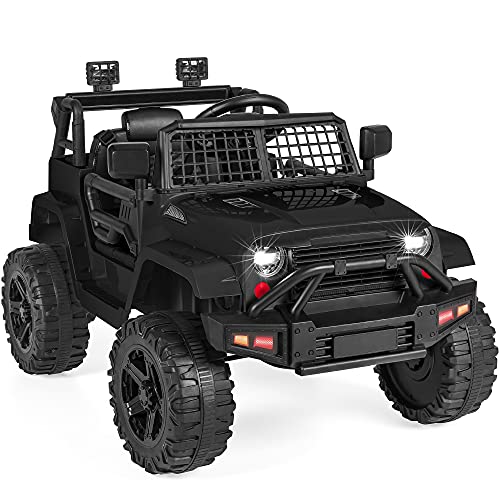 Best Choice Products 12V Kids Ride-On Car The safe default | Age 3+, first 12V with a remote | 8.5out of 10 | $189.99Amazon #ad disclosure |
| 2 | 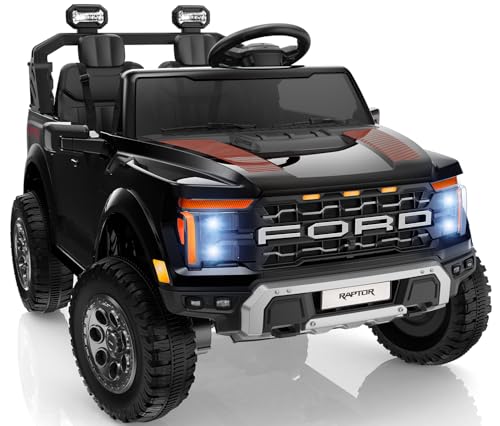 First Ride On 24V Ford F-150 Raptor 2-Seater Best if you can stretch | 3-8 years, completeness benchmark | 9.2out of 10 | $349.99Amazon #ad disclosure |
| 3 | 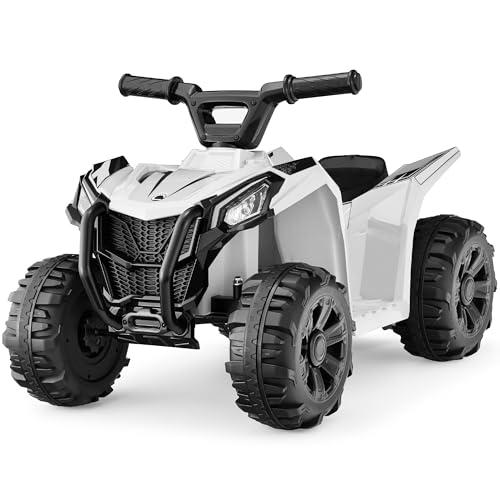 Best Choice Products 6V Kids Electric Ride-On ATV Best if the budget is tight | 1.5-3 years, longest 6V run time | 8.2out of 10 | $89.98Amazon #ad disclosure |
| 4 | 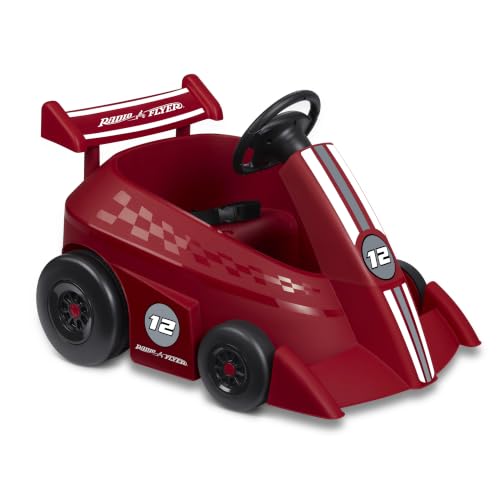 Radio Flyer Grow with Me Racer Best if they are under 2 | 1.5-4 years, grows with the child | 8.3out of 10 | $209.99Amazon #ad disclosure |
Scores are our own editorial ratings against the published rubric on how we pick. They are not customer ratings and they are not Amazon’s.
Most bad ride-on purchases are not bad products. They are good products bought for the wrong child, the wrong yard, or the wrong year. The way to avoid that is to answer the questions in a specific order, because each one narrows the field for the next.
Step 1
What does the child weigh today?
Not their age. Not their weight at their last check-up. Put them on a scale.
The weight limit is the specification that actually fails, and it is the one most frequently missing from listings — roughly a third of the vehicles we checked do not publish it anywhere. Having the child’s real weight lets you eliminate most of the market in one pass.
| Child’s age | Weight band to shop in | Voltage | Seats | Remote? | Our roundup |
|---|---|---|---|---|---|
| 1 year | 22 – 30 lb | None or 6V | 1 | Strongly yes | 1-year-olds |
| 2 years | 26 – 34 lb | 6V | 1 | Strongly yes | 2-year-olds |
| 3 years | 30 – 40 lb | 6V or 12V | 1 | Yes | 3-year-olds |
| 4 years | 34 – 45 lb | 12V | 1 or 2 | Useful | 4-year-olds |
| 5 years | 38 – 52 lb | 12V | 1 or 2 | Optional | 5-year-olds |
| 6 years | 42 – 58 lb | 12V or 24V | 2 | Optional | 6-year-olds |
| 7 years | 46 – 66 lb | 24V | 2 | Rarely needed | 7-year-olds |
| 8 years | 50 – 75 lb | 24V | 2 | No | 8-year-olds |
| 9 – 10 years | 56 – 90 lb | 24V or 36V | 2 | No | 8–10-year-olds |
| 11+ years | 70 – 120 lb | 36V | 1 – 2 | No | Big kids |
Weight bands are the 10th–90th percentile ranges from the CDC’s clinical growth charts for US children, rounded. Use your child’s actual current weight, not their age — that is the whole point of the table.
Then add headroom. Children gain 4 to 6 lb a year between three and eight, so multiply by the number of years you want this to last and add 10%. If your four-year-old weighs 40 lb and you want three years, you need a limit of about 66 lb — which immediately rules out every 44 lb 6V vehicle and a good number of 55 lb 12V ones.
And the rule for the unpublished case: if a listing gives no weight limit, assume the class minimum — 44 lb at 6V, 55 lb at 12V, 66 lb at 24V. That is not cynicism; it is what the unstated figure usually turns out to be. Full detail on weight limits.
Step 2
What will it drive on?
Walk out and look. This question sets the voltage floor, and getting it wrong is the second most common disappointment after weight.
- Hard, flat ground only (driveway, patio, indoors): 6V is enough.
- Short cut grass: 12V minimum, with traction strips or EVA tires rather than bare plastic.
- Long grass, gravel, or any slope: 24V with four motors. A two-motor vehicle will spin one wheel and stop.
Be honest about the slope. A gradient that is nothing to walk up is a genuine obstacle for a 12V vehicle and a tip-over risk for a tall one. The surface-by-surface detail is on the terrain guide, and the voltage reasoning is on voltage explained.
Step 3
How much control do you need to keep?
This is the safety question, and the answer is mostly set by age:
- Under 3: a parent remote, or a top speed under 1.5 mph so you can simply walk over and lift them out. One or the other is not optional.
- 3 to 5: a remote with named speed steps. The ability to set 1.9 mph for the first month and 3.1 mph later is the single most useful control feature available.
- 6 to 8: a lockable low speed setting is enough. The remote becomes a convenience.
- Over 8: a speed key on a fast vehicle, plus a helmet.
Check whether remote mode overrides the pedal rather than adding to it, because that is what determines whether a determined child can out-pedal your stop command. See how the parent remote works.
Step 4
One child or two?
If two children will use it at once, add both their current weights and shop above that total. Two average five-year-olds come to roughly 90 lb, which rules out every 66 lb two-seater in one line.
And read the number rather than the seat count. A two-seat body with a 66 lb limit is a one-child vehicle with a decorative second seat — we have several in our registry. The honest two-child figures start at 110 lb. See 2-seater ride-on cars and 1-seater vs 2-seater.
If it is one child but they are at the top of a weight band, a two-seat vehicle is often the better buy anyway — the higher weight limit and the wider seat both come with it.
Step 5
How long does it need to run?
Here the honest answer is: shorter than you expect, and the listing probably will not tell you. Published run times in our registry span 30 minutes to 2 hours, and fewer than a third of vehicles publish one at all.
What you can check is the amp-hour capacity, which is the figure run time actually comes from. A 12V 7Ah vehicle will run meaningfully longer than a 12V 4.5Ah one, and some sellers now call this out explicitly for exactly that reason. Where no capacity is published either, you are buying blind on this specification.
Then budget for the charging ratio: roughly ten hours in for one hour out on a lead-acid vehicle. If continuous afternoon play matters, buy a second battery rather than a bigger vehicle. See run time and charging.
Step 6
Now set the budget
Last, deliberately. By this point you know the voltage, the weight limit, the seat count and whether you need a remote, and that combination has a price. Deciding the price first is how people end up with a 24V two-seater for a two-year-old or a 44 lb 6V quad for a five-year-old.
Rough current bands for a vehicle that meets its published specs:
- $45 – $100: unpowered toddler ride-ons and 6V quads. Genuinely fine for under-threes.
- $100 – $180: 6V sit-in cars and entry 12V single-seaters, usually 4.5Ah.
- $180 – $250: the mainstream 12V band — 7Ah, a remote, a 66 lb limit, often a licensed body.
- $250 – $400: 24V two-seaters with 110 to 132 lb limits and 20-inch benches.
- $400+: 36V dirt bikes, large 24V UTVs, and the highest weight limits.
If the budget will not reach the specification your first five answers require, the better compromise is almost always to go down a class and up in quality rather than to buy an underspecified vehicle in the class you wanted. A well-documented 6V quad beats a 12V car whose seller will not state its weight limit.
Checklist
The six questions, as a list
- What does the child weigh today, and what will they weigh in three years?
- What surface will it drive on, and is there a slope?
- Do I need a parent remote, or is a lockable low speed enough?
- One rider or two, and what is their combined weight?
- What amp-hour capacity does it have, and can I charge it overnight?
- What does a vehicle meeting all of the above actually cost?
Our scoring rubric weights the same things in the same order, which is published on how we pick. And if you would rather skip to an answer, the age roundups start from step one for you — find your child’s age on the best-picks index.
Every pick in full
The picks, in detail
Each entry below carries the same nine specifications, taken from that model’s own current listing. Rows reading not stated by maker are specs the manufacturer does not publish — we show the gap rather than filling it in.
#1 · The safe default
8.5 / 10
Best Choice Products 12V Kids Ride-On Car
Best Choice Products
The default first 12V car: parent remote, 2.8 mph, and a 61 lb limit stated plainly rather than hidden in a dimensions line.
If you want one answer rather than a method: a 12V single-seater with a remote, a 61 lb limit and 2.8 mph suits more three-to-five-year-olds than anything else here.
The nine specs
Source: the manufacturer's own published specifications on the current Amazon listing.
Our scoring
- Fit at age9.0
- Parent control9.0
- Spec disclosure7.5
- Value8.5
What works
- Parent remote with forward and reverse
- Lockable doors, adjustable seatbelt, spring suspension
- Non-deflating plastic wheels with traction tread
- Small footprint: 39.25 x 26 x 26 in
What doesn’t
- Neither run time nor charge time is published
- 61 lb is the lowest limit of the 12V cars here
- No amp-hour figure
#2 · Best if you can stretch
9.2 / 10
First Ride On 24V Ford F-150 Raptor 2-Seater
First Ride On
Eight of nine specs, including a 3.5-5.0 mph band, a 132 lb limit, a 20-inch seat and a 98-foot remote — the completeness benchmark.
Eight of nine specs published, 132 lb across two seats, a 20-inch bench and a 98-foot remote. The vehicle that stays usable longest, by some margin.
The nine specs
Source: the manufacturer's own published specifications on the current Amazon listing.
Our scoring
- Fit at age9.5
- Parent control9.0
- Spec disclosure9.5
- Value8.5
What works
- Eight of nine specs published — the most complete sheet in the registry
- Speed as a band, remote range in feet, seat width in inches
- 132 lb limit with a stated 3-8 year range
- Officially licensed Ford F-150 Raptor
What doesn’t
- Charge time is the single missing spec
- 5 mph top end needs the remote for a three-year-old
- Among the most expensive here
#3 · Best if the budget is tight
8.2 / 10
Best Choice Products 6V Kids Electric Ride-On ATV
Best Choice Products
The most complete 6V spec sheet in this price band: speed, run time and capacity are all published, which is rarer than it should be.
A well-documented 6V quad beats a cheap 12V car whose seller will not state the weight limit. Honest specs at a low price are worth more than a bigger number.
The nine specs
Source: the manufacturer's own published specifications on the current Amazon listing.
Our scoring
- Fit at age9.0
- Parent control6.0
- Spec disclosure8.5
- Value9.0
What works
- 1-2 hr run time is the longest published figure at 6V
- Removable battery, so you can charge it off the vehicle
- 4-wheel suspension and treaded tires for grass and dirt
- One-button control a toddler can actually work
What doesn’t
- No parent remote
- Amp-hour capacity is not published, so run time can't be sanity-checked
- 1.8 mph is quick for the youngest end of the stated range
#4 · Best if they are under 2
8.3 / 10
Radio Flyer Grow with Me Racer
Radio Flyer
#ad · Price as of November 8, 2026 · how this is funded
Converts from a parent-pushed ride-on to a 6V powered racer as the child grows — the only vehicle here that spans 1.5 to 4 years honestly.
Converts from parent-pushed to child-driven across a genuine 1.5 to 4 year span — the only vehicle here that honestly spans that range.
The nine specs
Source: the manufacturer's own published specifications on the current Amazon listing.
Our scoring
- Fit at age9.5
- Parent control9.0
- Spec disclosure6.5
- Value8.0
What works
- Multiple modes across a genuine 1.5-4 year span
- 2 mph is the right speed for the youngest mode
- Radio Flyer build and parts support
- Parent push handle and control
What doesn’t
- Weight limit is not published, which matters on a convertible
- No run time or charge time
- Costs more than a plain 6V car
Questions parents ask
Frequently asked questions
What should I look for when buying a kids ride-on car?
What is the best first ride-on toy?
Should I buy 12V or 24V?
How much should I spend on a ride-on toy?
Is a more expensive ride-on always better?
What if the listing does not give a weight limit?
Where these numbers come from
Sources
- CDC Clinical Growth Charts (weight-for-age percentiles)
- ASTM F963 — Standard Consumer Safety Specification for Toy Safety
- CPSC — Age Determination Guidelines for toys
Product specifications on this page are taken from each manufacturer’s own published listing. Where a manufacturer does not publish a figure, the row reads “not stated by maker” rather than carrying an estimate.
Read next