Storage reference
Weather and storage
A ride-on left outside does not usually break in the rain. It breaks the following spring, when the battery that sat flat all winter will not take a charge.
Written by
Mike M. · owner, Iron Mako Media
Published November 1, 2026 · specs checked against each maker’s current listing
Price checked November 8, 2026
Verdict first
Quick picks
A ride-on left outside does not usually break in the rain. It breaks the following spring, when the battery that sat flat all winter will not take a charge.. Tap any row to jump to that model’s full write-up below, or go straight to Amazon from the price column. Prices last checked November 8, 2026.
| # | Product | Best for | Score | Price |
|---|---|---|---|---|
| 1 | 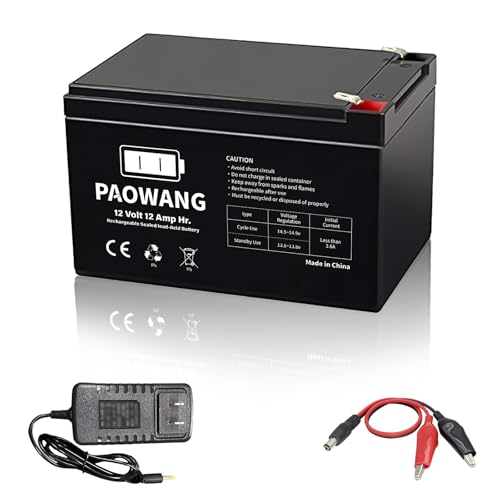 12V 12Ah Sealed Lead-Acid Battery (F1 Terminal) Best winter replacement | 7Ah to 12Ah capacity upgrade | 8.3out of 10 | $39.99Amazon #ad disclosure |
| 2 | 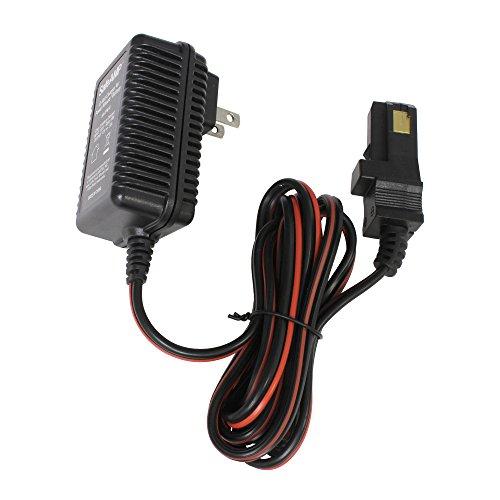 SafeAMP 12V Charger for Power Wheels Gray Battery Keep it topped up | UL Listed 12V replacement | 8.5out of 10 | $13.99Amazon #ad disclosure |
| 3 | 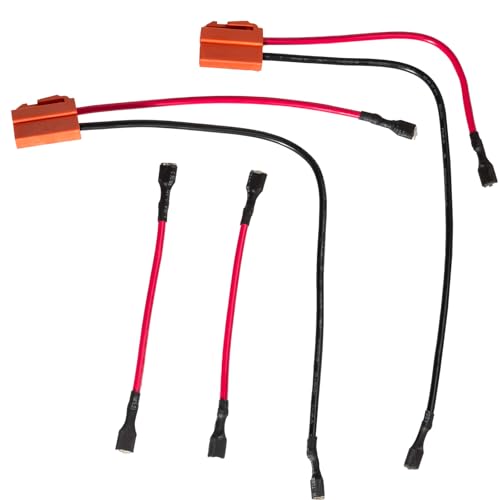 Ride-On Wiring Harness Battery Connector (6V / 12V / 24V) Fix winter corrosion | Replacing a melted connector | 8.0out of 10 | $12.88Amazon #ad disclosure |
Scores are our own editorial ratings against the published rubric on how we pick. They are not customer ratings and they are not Amazon’s.
Ride-ons live outside, which is where they are used, and the question is really about degrees. Some exposure is unavoidable and harmless. Some is cumulative and expensive. The distinction is worth knowing because the cheap precautions address almost all of the expensive damage.
Rain
What water actually damages
Harmless: rain on the bodywork. The shell is polypropylene and it does not care. Getting caught in a shower mid-session is not an event.
Harmful: standing water in the battery compartment. Most compartments are under the seat or behind a panel and are not sealed — they are designed to shed splashes, not to be submerged or to sit full of water for a week. What corrodes is the battery terminals and the connector, and a corroded connector raises resistance, which makes it run hot. That is both a performance problem and a fire risk.
Also harmful: water on the receiver board, which is the parent-remote electronics. Usually mounted higher up, but a vehicle left out through a storm can take water there, and the symptom is a remote that stops pairing.
So the practical rule is not “never leave it out” but “do not leave it out through heavy rain, and if it has been, open the battery compartment and dry it before charging”.
Sun
UV is the one that gets the bodywork
Sunlight is slower and more certain than rain. UV embrittles polypropylene and fades the color, and the parts that go first are the thin ones — mirrors, windscreen frames, door catches and decals. A three-year-old vehicle kept in direct sun will have brittle trim that snaps when handled; the same vehicle kept shaded will not.
A cover or a shaded corner of the yard is the fix and it costs nothing. This is also the main reason a second-hand ride-on from a garage is worth more than one from a lawn.
Cold
Cold, and the winter problem
Cold itself does not damage a sealed lead-acid battery. A discharged battery in the cold does, badly — a flat lead-acid cell can freeze, and freezing damages the plates permanently. A fully charged one has a much lower freezing point and will sit out a winter without harm.
That single fact is the whole winter-storage routine. A battery stored charged usually survives; a battery stored flat usually does not, and the owner concludes in April that the vehicle has worn out.
The routine
Winter storage, in five steps
- Charge it fully before storage, using the manufacturer’s stated charge time. This is the step that matters most.
- Disconnect the battery from the vehicle. Some ride-ons have a small standing draw from the receiver board, and over four months that is enough to flatten a pack.
- Store the battery indoors if you can — a garage shelf or a cupboard, somewhere above freezing. Keep it off bare concrete; a board or a shelf is fine.
- Top it up every four to eight weeks. A short charge is enough. This is what stops it drifting down to the voltage where damage starts.
- Keep the charger with it. A lost charger over winter is the most common reason a vehicle is not ready in spring, and a replacement is $10 to $14 — see best ride-on car chargers.
Spring
Getting it going again
Charge the battery fully, then test it under load rather than by voltage alone. A battery that has lost capacity will read close to the right voltage with nothing connected and collapse the moment the vehicle moves. If the vehicle runs for a few minutes and then stops, the battery is finished rather than flat — see battery replacement.
Then check the connector for corrosion, the wheel hubs for cracks, and the child against the weight limit — they have grown since autumn, and an over-limit vehicle produces symptoms that look exactly like a battery fault. The full routine is on the maintenance checklist, and the quick version is on the safety checklist.
Every pick in full
The picks, in detail
Each entry below carries the same nine specifications, taken from that model’s own current listing. Rows reading not stated by maker are specs the manufacturer does not publish — we show the gap rather than filling it in.
#1 · Best winter replacement
8.3 / 10
12V 12Ah Sealed Lead-Acid Battery (F1 Terminal)
MLGBDC
#ad · Price as of November 8, 2026 · how this is funded
A bare 12V 12Ah AGM cell with F1 terminals — the capacity upgrade if your vehicle came with 7Ah and has room in the tray.
If the battery did not survive the winter, this is the sensible replacement — 12Ah AGM for under $40, sealed and spill-proof in any orientation.
The nine specs
Source: the manufacturer's own published specifications on the current Amazon listing.
Our scoring
- Capacity9.0
- Value9.5
- Compatibility7.5
- Spec disclosure7.0
What works
- 12Ah against a stock 7Ah is roughly 70% more run time
- AGM construction — sealed and spill-proof in any orientation
- Standard F1 terminals
- Cheapest route to more run time
What doesn’t
- Bare terminals: you supply the wiring harness and connector
- Physically larger than a 7Ah — measure the tray first
- Charge time not published
#2 · Keep it topped up
8.5 / 10
SafeAMP 12V Charger for Power Wheels Gray Battery
SafeAMP
#ad · Price as of November 8, 2026 · how this is funded
UL Listed, which is the only charger spec that genuinely matters — it is plugged into a wall near a child.
A spare UL Listed charger is worth owning, because the single most common cause of a dead spring battery is a charger lost over winter.
The nine specs
Source: the manufacturer's own published specifications on the current Amazon listing.
Our scoring
- Safety9.5
- Compatibility8.5
- Value8.0
- Spec disclosure7.5
What works
- UL Listed — independently safety-tested
- Correct gray/orange Power Wheels connector
- Known brand with real support
- Direct genuine-charger replacement
What doesn’t
- Gray-connector vehicles only
- Output amperage is not published
- Costs more than unlisted no-name chargers
#3 · Fix winter corrosion
8.0 / 10
Ride-On Wiring Harness Battery Connector (6V / 12V / 24V)
ToiCottage
#ad · Price as of November 8, 2026 · how this is funded
A universal harness across 6V, 12V and 24V, with Kid Trax and UTV fitment named — the fix for a melted connector.
Moisture in the battery compartment corrodes the connector first. This covers 6V, 12V and 24V and is the usual spring repair.
The nine specs
Source: the manufacturer's own published specifications on the current Amazon listing.
Our scoring
- Compatibility9.0
- Value9.0
- Spec disclosure6.5
- Urgency8.5
What works
- Covers all three ride-on voltages
- Named Kid Trax, Huffy and UTV compatibility
- A melted connector is the most common ride-on electrical fault
- Cheap enough to keep spare
What doesn’t
- Wire gauge is not published — matters most at 24V
- Universal fit means checking yours matches
- No fuse included
Questions parents ask
Frequently asked questions
Can Power Wheels be left outside?
Can a ride-on car get rained on?
How should I store a ride-on car over winter?
Will cold weather damage a ride-on battery?
My ride-on will not work after winter. What now?
Where these numbers come from
Sources
- Battery Council International — lead-acid battery care and storage
- CPSC — product safety guidance and recalls
Product specifications on this page are taken from each manufacturer’s own published listing. Where a manufacturer does not publish a figure, the row reads “not stated by maker” rather than carrying an estimate.
Read next