6V vs 12V
6V vs 12V ride-on toys
The question that settles this is not the child's age. It is whether the vehicle needs to cross grass.
Written by
Mike M. · owner, Iron Mako Media
Published October 18, 2026 · last updated November 8, 2026 · specs checked against each maker’s current listing
How this page is funded: we earn a commission when you buy through our Amazon links, at no extra cost to you. It does not change which products we pick or what we say about them — the scoring rubric is published and applied the same way to every product. Full disclosure.
Price checked November 8, 2026
Verdict first
Quick picks
The question that settles this is not the child's age. It is whether the vehicle needs to cross grass.. Tap any row to jump to that model’s full write-up below, or go straight to Amazon from the price column. Prices last checked November 8, 2026.
| # | Product | Best for | Score | Price |
|---|---|---|---|---|
| 1 | 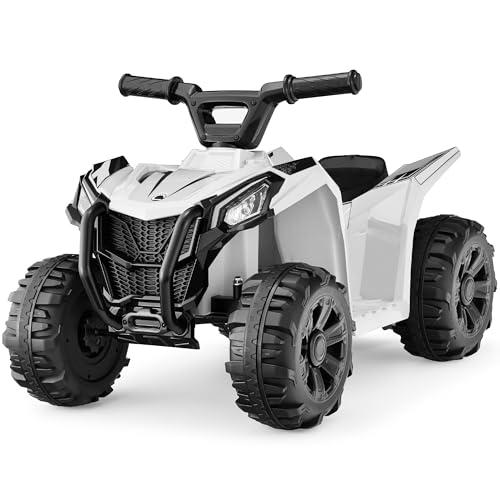 Best Choice Products 6V Kids Electric Ride-On ATV Best 6V | 1.5-3 years, longest 6V run time | 8.3out of 10 | $89.98Amazon #ad disclosure |
| 2 | 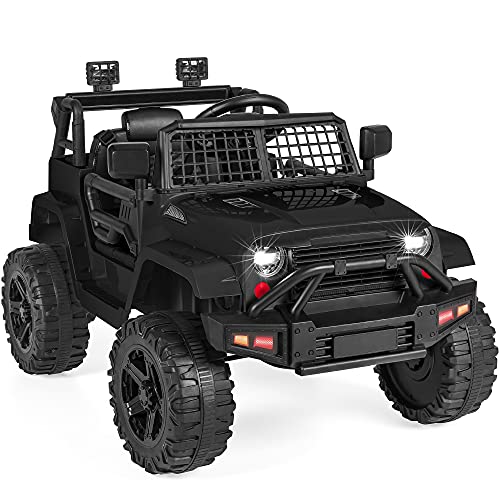 Best Choice Products 12V Kids Ride-On Car Best 12V | Age 3+, first 12V with a remote | 8.5out of 10 | $189.99Amazon #ad disclosure |
| 3 | 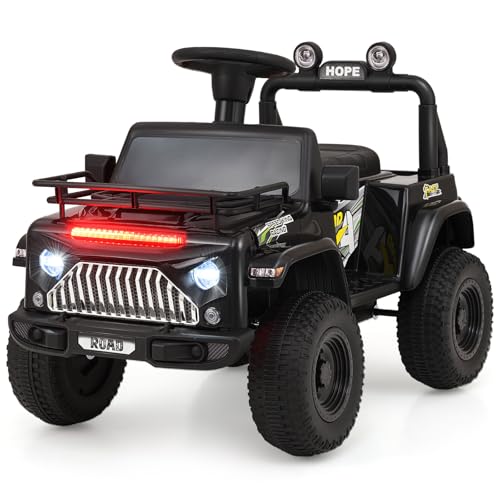 OLAKIDS 6V Kids Off-Road Truck Best 6V specs | Cheapest sit-in car shape | 8.2out of 10 | $59.99Amazon #ad disclosure |
| 4 | 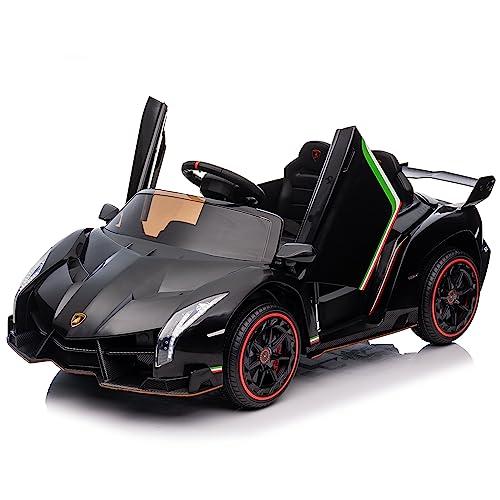 Winado 12V Lamborghini Veneno Best documented 12V | 3-6 years, complete spec sheet | 8.7out of 10 | $149.99Amazon #ad disclosure |
Scores are our own editorial ratings against the published rubric on how we pick. They are not customer ratings and they are not Amazon’s.
This is the younger-end version of the voltage decision, and it is simpler than 12V versus 24V because the two classes barely overlap. 6V is an eighteen-month-to-three-year proposition; 12V is three-to-five. If you know the child’s age you have mostly answered it.
Where it gets interesting is at the boundary — a large two-and-a-half-year-old, or a small three-and-a-half-year-old — and there the deciding factor is the surface rather than the child.
The comparison
Side by side
| Specification | 6V | 12V | Verdict |
|---|---|---|---|
| Top speed | 0.93 – 2 mph | 2.5 – 5 mph | Depends on age |
| Weight limit | 44 – 66 lb | 55 – 130 lb | 12V |
| Typical age | 18 mo – 3 yr | 3 – 5 yr | — |
| Grass | Short cut only, barely | Short cut, properly | 12V, decisively |
| Parent remote | Rare | Usual | 12V |
| Motor power | 15 – 30W | 2 × 25-35W | 12V |
| Price | $45 – $180 | $100 – $250 | 6V |
| Storage | 27 in, indoors | 39-45 in, garage | 6V |
The decider
Grass settles it
6V has 15W to 30W of motor. That is enough to move a small child on a hard flat surface and not much else. On short freshly cut grass a 6V vehicle with rubber traction strips will crawl; on bare plastic wheels it will skate. In anything longer it stops.
12V with two 25W motors crosses a mown lawn at a walking pace. That is the practical dividing line, and it is why a family with a grass yard should treat 12V as the floor even for a two-and-a-half-year-old — with the speed on its lowest setting and a remote in hand. See the terrain guide.
The 66 lb case
When 6V is genuinely enough
Most 6V vehicles stop at 44 lb, which an average child reaches at about five. But a handful publish 66 lb — the same as most 12V cars — and those change the arithmetic considerably.
A 66 lb 6V sit-in car with 30W motors and eight of nine specs published, at well under half the 12V price, is a better purchase for a patio-bound three-year-old than a 12V car whose seller will not state its weight limit. Go down a class and up in quality is the right instinct here. See best 6V ride-on toys.
Remotes
The one feature gap
Parent remotes are usual at 12V and rare at 6V, which is backwards from where they are most needed. One 6V quad in our registry has a remote that overrides the pedal with an emergency brake, and it is the top pick on several of our pages for exactly that reason.
If the child is under two and you want a remote, that vehicle or a 12V car with the speed locked low are the two routes. See how the parent remote works.
Every pick in full
The picks, in detail
Each entry below carries the same nine specifications, taken from that model’s own current listing. Rows reading not stated by maker are specs the manufacturer does not publish — we show the gap rather than filling it in.
#1 · Best 6V
8.3 / 10
Best Choice Products 6V Kids Electric Ride-On ATV
Best Choice Products
The most complete 6V spec sheet in this price band: speed, run time and capacity are all published, which is rarer than it should be.
1.8 mph, a 44 lb limit and 1-2 hours of published run time with a removable battery. This is what a well-documented 6V vehicle looks like.
The nine specs
Source: the manufacturer's own published specifications on the current Amazon listing.
Our scoring
- Spec disclosure8.5
- Fit for age9.0
- Run time9.5
- Value9.0
What works
- 1-2 hr run time is the longest published figure at 6V
- Removable battery, so you can charge it off the vehicle
- 4-wheel suspension and treaded tires for grass and dirt
- One-button control a toddler can actually work
What doesn’t
- No parent remote
- Amp-hour capacity is not published, so run time can't be sanity-checked
- 1.8 mph is quick for the youngest end of the stated range
#2 · Best 12V
8.5 / 10
Best Choice Products 12V Kids Ride-On Car
Best Choice Products
The default first 12V car: parent remote, 2.8 mph, and a 61 lb limit stated plainly rather than hidden in a dimensions line.
2.8 mph, a 61 lb limit and a parent remote. Note it publishes neither run time nor charge time, where the 6V above publishes both.
The nine specs
Source: the manufacturer's own published specifications on the current Amazon listing.
Our scoring
- Spec disclosure7.5
- Fit for age9.0
- Run time6.5
- Value8.5
What works
- Parent remote with forward and reverse
- Lockable doors, adjustable seatbelt, spring suspension
- Non-deflating plastic wheels with traction tread
- Small footprint: 39.25 x 26 x 26 in
What doesn’t
- Neither run time nor charge time is published
- 61 lb is the lowest limit of the 12V cars here
- No amp-hour figure
#3 · Best 6V specs
8.2 / 10
OLAKIDS 6V Kids Off-Road Truck
OLAKIDS
A sit-in 6V truck with a 66 lb limit and a published 60-minute run time — the cheapest honest entry into a car-shaped ride-on.
A 66 lb limit and 30W motors at 6V, with eight of nine specs published. The 66 lb figure is what closes most of the gap to 12V.
The nine specs
Source: the manufacturer's own published specifications on the current Amazon listing.
Our scoring
- Spec disclosure9.0
- Fit for age8.0
- Run time8.0
- Value9.5
What works
- All nine specs except the remote are published
- 66 lb limit on a 6V vehicle
- 30W motors — stronger than the 15W in most 6V quads
- Storage space behind the seat
What doesn’t
- No parent remote, the usual 6V compromise
- The stated 3-8 year range is optimistic at the top end
- 8-10 hr charge for ~60 min of play
#4 · Best documented 12V
8.7 / 10
Winado 12V Lamborghini Veneno
Winado
#ad · Price as of November 8, 2026 · how this is funded
Eight of the nine specs are published, including the charge-to-run ratio most brands won't print: 8-12 hours in, 1-2 hours out.
4.3 mph with both run time and charge time published. If you are paying for 12V, this is the level of disclosure to hold out for.
The nine specs
Source: the manufacturer's own published specifications on the current Amazon listing.
Our scoring
- Spec disclosure9.0
- Fit for age8.5
- Run time8.5
- Value8.5
What works
- Both run time and charge time published — rare at any price
- Hydraulic doors that actually swing up
- Remote gives 3 speeds, manual gives 2
- 4.3 mph is the quickest 12V single-seater here
What doesn’t
- 4.3 mph is fast for the bottom of the stated 3-6 range
- Amp-hour capacity is not published
- 8-12 hr charge is a full overnight
Questions parents ask
Frequently asked questions
Should I buy 6V or 12V for a 3-year-old?
Will a 6V ride-on work on grass?
Is 12V too fast for a 2-year-old?
Are there 6V ride-ons with a 66 lb weight limit?
Do 6V ride-ons have parent remotes?
Where these numbers come from
Sources
- CDC Clinical Growth Charts (weight-for-age percentiles)
- ASTM F963 — Standard Consumer Safety Specification for Toy Safety
- CPSC safety guides and education materials
Product specifications on this page are taken from each manufacturer’s own published listing. Where a manufacturer does not publish a figure, the row reads “not stated by maker” rather than carrying an estimate.
Read next